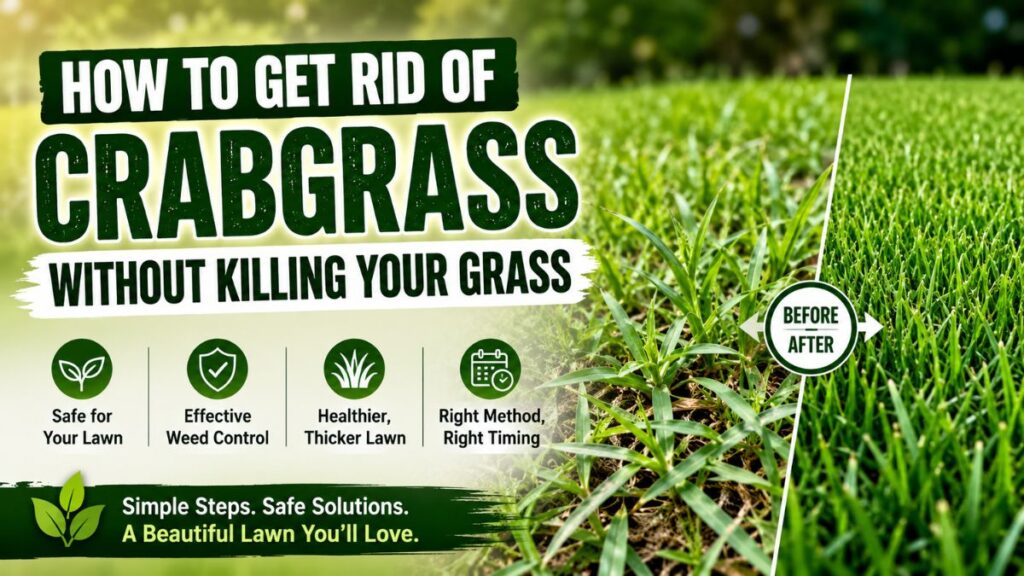
You water your lawn, mow it regularly, and still wake up to ugly patches of crabgrass spreading across the yard. It feels unfair — especially when healthy grass suddenly starts losing the battle. The good news? You do not need harsh chemicals or extreme lawn treatments to fix it. Learning how to get rid of crabgrass without killing your grass can save your lawn, your money, and countless hours of frustration.
Crabgrass is aggressive, but it thrives mainly in weak or thin lawns. With the right timing and a few smart lawn care techniques, you can remove it safely while helping your grass grow thicker and healthier than before.
Why Crabgrass Keeps Taking Over Your Lawn
Crabgrass Loves Weak, Thin Grass
Crabgrass is an opportunistic weed. It quickly fills empty spaces where turfgrass struggles to grow. Common causes include:
- Bare spots in the lawn
- Overwatering or underwatering
- Mowing too short
- Compacted soil
- Poor fertilization
Once crabgrass produces seeds, it spreads rapidly and can return even worse the following season.
The Biggest Mistake Homeowners Make
Many people spray strong weed killers without checking if the product is safe for their grass type. This often leads to:
- Yellow patches
- Burned turf
- Dead grass around treated areas
Instead, focus on selective methods designed specifically for safe crabgrass removal from lawns.
Timing Matters More Than Most People Think
Crabgrass is easiest to control when it is young. Mature plants become harder to kill and produce thousands of seeds.
For the best results, use the right treatment at the right time. You can quickly estimate the perfect application window with the Crabgrass Treatment Timing Calculator.
Best Ways to Kill Crabgrass Without Harming Grass
Use a Selective Crabgrass Herbicide
A selective herbicide targets crabgrass while leaving healthy turf mostly untouched. Look for products labeled safe for your lawn type.
This is one of the most effective methods for how to kill crabgrass in a healthy lawn without damaging surrounding grass.
Before applying:
- Read the label carefully
- Avoid spraying during extreme heat
- Do not mow immediately before treatment
- Water lightly if instructions recommend it
Pull Young Crabgrass by Hand
If the infestation is small, hand-pulling works surprisingly well.
The best time to pull crabgrass is:
- After rain
- Early in the season
- Before seed heads appear
Grip the weed low near the soil and remove the entire root system. Leaving roots behind may allow regrowth.
Improve Lawn Thickness Naturally
Healthy grass is the best defense against crabgrass.
To strengthen your lawn:
- Raise mowing height slightly
- Fertilize properly
- Overseed thin areas
- Water deeply but less often
These simple steps help prevent future outbreaks and support natural crabgrass control without chemicals.
How to Prevent Crabgrass From Coming Back
Apply a Pre-Emergent Herbicide
Pre-emergent herbicides stop crabgrass seeds before they germinate. This is one of the smartest long-term prevention strategies.
For best results:
- Apply in early spring
- Water it into the soil
- Avoid disturbing the treated ground afterward
This approach works especially well for homeowners searching for best crabgrass prevention for thick lawns.
Fix Bare Spots Immediately
Empty patches are basically invitations for crabgrass.
Whenever you notice thin grass:
- Add quality grass seed
- Improve soil health
- Keep new seed moist until established
A dense lawn naturally crowds out weeds before they can spread.
Adjust Your Mowing Routine
Many homeowners unknowingly encourage crabgrass by mowing too short.
Follow the “one-third rule”:
- Never remove more than one-third of grass height at once
- Keep cool-season grass taller during summer stress
Taller turf shades the soil, making it harder for crabgrass seeds to germinate.
FAQs:
Can crabgrass die on its own?
Yes, crabgrass dies after the first frost. However, the seeds remain in the soil and can return next season if untreated.
Is vinegar safe for killing crabgrass?
Vinegar may kill crabgrass, but it can also damage nearby grass. Spot treatments must be used carefully.
What is the fastest way to remove crabgrass?
Young crabgrass responds best to selective herbicides or hand-pulling before it produces seeds.
Conclusion:
Crabgrass may spread fast, but it does not have to take over your lawn. By combining proper mowing, healthier turf practices, and carefully timed treatments, you can remove crabgrass without destroying the grass you worked hard to grow.