A thick, green lawn looks effortless — until the soil underneath becomes hard, compacted, and lifeless. If your grass feels spongy, drains poorly, or struggles to grow despite watering and fertilizer, your lawn may be begging for aeration. The good news? You don’t need expensive machines or rental equipment to fix it. Learning how to aerate your lawn without renting equipment can save money, improve soil health, and revive tired grass using simple tools you may already own.
Homeowners often assume lawn aeration is complicated, but small DIY methods can make a dramatic difference when done correctly. With the right timing and technique, you can loosen compacted soil and help your lawn breathe again — all without leaving your driveway.
Why Lawn Aeration Matters More Than Most Homeowners Realize
Signs Your Lawn Needs Aeration
Many lawns silently suffer from compacted soil. Watch for these warning signs:
- Water puddles after rain
- Thin or patchy grass
- Hard soil that’s difficult to dig
- Excess thatch buildup
- Heavy foot traffic areas turning brown
When soil becomes compacted, oxygen, nutrients, and water struggle to reach the roots. That weakens your grass and encourages weeds to take over.
The Benefits of DIY Lawn Aeration
Even without specialized equipment, aerating your lawn can:
- Improve root growth
- Increase water absorption
- Reduce runoff
- Help fertilizer work better
- Create thicker, healthier grass
For smaller lawns especially, DIY aeration can be just as effective as machine aeration when done consistently.
Best Time to Aerate Your Lawn
Timing matters. Cool-season grasses respond best during early fall or spring, while warm-season grasses prefer late spring to early summer.
Avoid aerating during drought stress or extreme heat because the grass may struggle to recover.
How to Aerate Your Lawn Without Renting Equipment
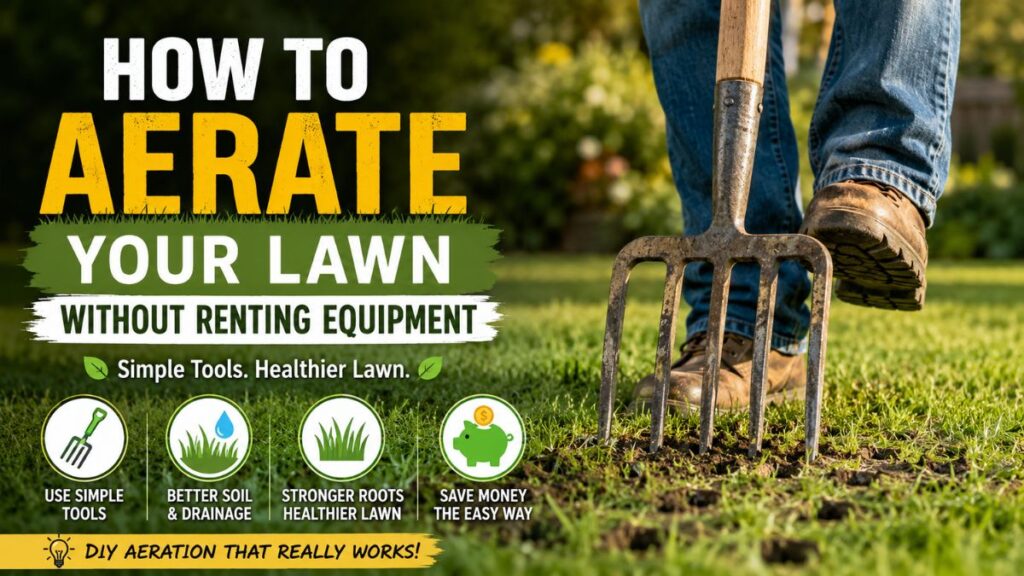
Use a Garden Fork for Simple Core Aeration
A sturdy garden fork is one of the easiest tools for manual lawn aeration.
Here’s how:
- Water the lawn lightly one day before aerating.
- Push the fork 3–4 inches into the soil.
- Wiggle it slightly to loosen compacted dirt.
- Repeat every few inches across problem areas.
This method works especially well for small lawns and compacted zones near walkways or patios.
Try Aerator Sandals for Light Compaction
Aerator sandals are inexpensive shoes with spikes attached to the bottom. While they don’t remove soil plugs like professional core aerators, they can help loosen lightly compacted lawns.
They’re most effective when:
- Soil is slightly moist
- Grass has mild compaction
- Used regularly during the growing season
This is one of the easiest ways to aerate compacted soil naturally without heavy labor.
Create Better Results With Compost Topdressing
After aerating, spread a thin layer of compost across your lawn. This improves soil structure and encourages microbial activity.
Benefits include:
- Better moisture retention
- Stronger root development
- Healthier soil biology
Combining manual aeration with compost can dramatically improve lawn recovery over time.
Smart Lawn Care Habits That Prevent Soil Compaction
Reduce Heavy Foot Traffic
Repeated pressure from walking, pets, or equipment compresses the soil. Rotate play areas or create stepping-stone paths to protect vulnerable sections.
Water Deeply Instead of Frequently
Shallow watering creates weak roots. Deep watering encourages roots to grow deeper into the soil, improving drought resistance and overall lawn health.
This tip is especially useful for homeowners searching for easy lawn aeration methods at home that produce lasting results.
Overseed After Aerating
Freshly aerated soil creates ideal seed-to-soil contact. Overseeding after aeration helps fill thin patches and encourages thicker turf growth.
For best results:
- Choose grass seed suited to your climate
- Keep soil moist during germination
- Avoid mowing too soon
You can also estimate your lawn’s aeration needs with the Lawn Aeration Calculator tool before starting your project.
Stay Consistent Every Year
Aeration isn’t a one-time fix. Most lawns benefit from annual aeration, especially if the soil contains heavy clay or experiences frequent traffic.
Small yearly improvements often produce better long-term results than occasional aggressive treatments.
FAQs:
Can I aerate my lawn without a machine?
Yes. A garden fork, aerator sandals, or manual spike tools can effectively loosen compacted soil in small to medium lawns.
Does manual lawn aeration actually work?
Absolutely. Manual aeration improves airflow, water absorption, and root growth when performed correctly and consistently.
Should I water before aerating?
Yes. Slightly moist soil makes aeration easier and helps tools penetrate deeper without damaging grass roots.
Conclusion:
A healthier lawn doesn’t require expensive rentals or professional equipment. By using simple manual techniques, improving soil naturally, and maintaining consistent lawn care habits, you can restore compacted grass and encourage stronger growth from the roots up. Start small, stay consistent, and your lawn will reward you with greener, thicker turf over time. If your yard has been struggling lately, now is the perfect time to try these easy aeration methods yourself.