You water it, mow it, and even spend money on fertilizer—so why does your lawn still look patchy, dull, or unhealthy? The truth is, many homeowners unknowingly make small lawn care mistakes that slowly destroy grass health over time. These issues often go unnoticed until bare spots, weeds, thinning grass, or brown patches take over the yard.
If your lawn never seems to reach that thick, green, healthy look, there’s a good chance one of these common lawn mistakes is the reason. The good news? Most of them are easy to fix once you know what to look for.
In this guide, you’ll discover the biggest lawn care errors homeowners make and how to correct them before your yard gets worse.
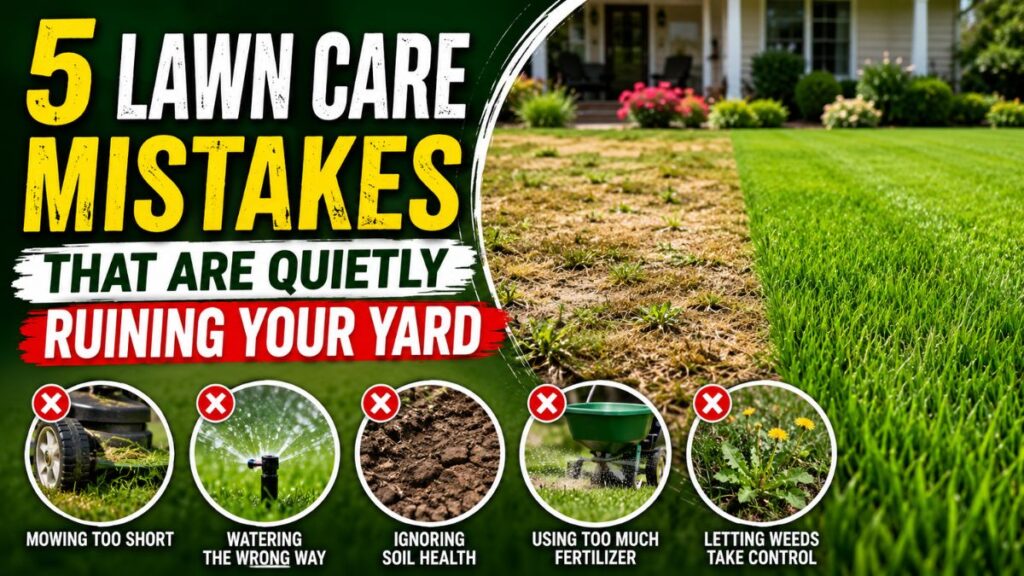
Mowing Your Grass Too Short
Why Scalping Damages Your Lawn
One of the most common lawn care mistakes is cutting grass too short. Many people think shorter grass means less mowing, but it actually weakens your lawn.
When grass blades are cut too low:
- Roots become shallow
- Soil dries out faster
- Weeds spread more easily
- Grass struggles during heat
This mistake quietly stresses your lawn week after week.
The Right Way to Mow
Instead of removing most of the grass height at once, follow the “one-third rule”:
- Never cut more than one-third of the blade length
- Keep mower blades sharp
- Adjust mowing height based on grass type
Using the correct mowing height makes a huge difference in lawn thickness and color. You can use this helpful Mowing Height Calculator by Grass Type to find the ideal height for your lawn.
Watering Too Often or at the Wrong Time
Overwatering Can Be Worse Than Underwatering
Many homeowners assume more water equals greener grass. In reality, frequent shallow watering creates weak roots and increases disease risk.
Signs of overwatering include:
- Mushy soil
- Yellowing grass
- Fungus growth
- Thin turf
Grass needs deep watering, not constant watering.
Best Lawn Watering Practices
For a healthier yard:
- Water deeply 1–2 times per week
- Water early in the morning
- Avoid evening watering
- Aim for about 1 inch of water weekly
Deep watering encourages strong root growth that helps lawns survive drought and heat.
Ignoring Soil Health
Healthy Grass Starts Underground
You can fertilize all you want, but unhealthy soil will always limit lawn growth. Poor soil often causes:
- Slow grass growth
- Bare patches
- Compacted areas
- Weed invasions
Many struggling lawns simply lack proper nutrients or airflow underground.
Simple Ways to Improve Soil
To restore soil health:
- Aerate compacted lawns annually
- Add compost naturally
- Test soil pH every few years
- Use organic matter to improve drainage
Healthy soil creates stronger roots, thicker turf, and better resistance against weeds and disease.
Using Too Much Fertilizer
More Fertilizer Doesn’t Mean Faster Growth
Overfertilizing is one of the worst lawn maintenance tips people misunderstand. Too much fertilizer can actually burn your lawn and create rapid weak growth.
Excess fertilizer often leads to:
- Brown burnt patches
- Weak grass blades
- Increased mowing
- Pest problems
Fertilize Smarter, Not Heavier
For better results:
- Follow package instructions carefully
- Use slow-release fertilizer
- Avoid fertilizing during extreme heat
- Feed grass during active growing seasons
A balanced feeding schedule helps lawns grow evenly without unnecessary stress.
Letting Weeds Take Control
Weeds Are More Than Just Ugly
Weeds compete directly with grass for:
- Water
- Nutrients
- Sunlight
- Space
Once weeds spread, healthy grass becomes weaker and thinner.
Common lawn weeds often appear because the grass itself is unhealthy.
Preventing Weed Problems Naturally
The best weed control strategy is building a thick lawn.
Here’s how:
- Mow at proper height
- Water deeply
- Overseed thin areas
- Improve soil quality
- Avoid bare spots
Strong grass naturally crowds out many common weeds before they become a major issue.
Small Lawn Mistakes Create Big Problems
Most damaged lawns don’t fail overnight. They slowly decline because of repeated small mistakes that weaken grass month after month. The encouraging part is that fixing even one or two of these habits can dramatically improve your yard.
Start simple:
- Raise your mowing height
- Water correctly
- Improve soil health
- Fertilize responsibly
- Keep weeds under control
With consistent care and smarter lawn habits, your yard can become greener, thicker, and healthier faster than you think.
FAQs:
How often should I water my lawn?
Most lawns need deep watering 1–2 times per week, depending on weather and soil conditions.
What is the biggest mistake homeowners make with lawns?
Mowing grass too short is one of the most damaging mistakes because it weakens roots and encourages weeds.
Can a damaged lawn recover?
Yes. Most lawns can recover with proper watering, mowing, fertilizing, and soil improvement practices.