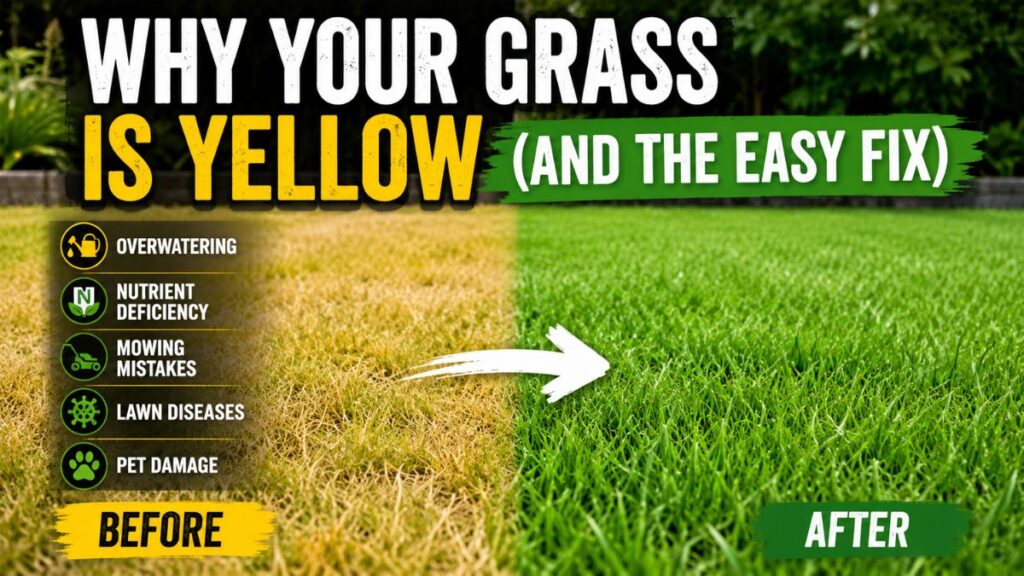
A lush green lawn can instantly make your home look healthier, cleaner, and more inviting. But when yellow patches suddenly appear, it feels frustrating — especially after all the watering, mowing, and care you’ve already put in. The good news? Yellow grass is usually your lawn’s way of signaling a simple problem that can be fixed faster than most homeowners think.
If you’ve been wondering “why is my grass turning yellow?”, you’re not alone. From watering mistakes to nutrient deficiencies, several common lawn care habits can quietly stress your grass. The key is identifying the cause early before those yellow areas spread across your yard.
In this guide, you’ll learn the most common reasons grass turns yellow, the easiest ways to fix it, and how to restore your lawn’s healthy green color without wasting money on unnecessary treatments.
The Most Common Reasons Grass Turns Yellow
Yellow grass rarely happens randomly. In most cases, your lawn is reacting to stress, poor soil conditions, or improper maintenance.
Overwatering Can Suffocate Your Lawn
Many homeowners assume yellow grass means the lawn needs more water. Ironically, too much water is often the real problem.
When soil stays constantly wet:
- Grass roots struggle to breathe
- Fungus develops more easily
- Nutrients wash away from the soil
- Roots become weak and shallow
Easy Fix
- Water deeply only 1–2 times per week
- Let the top layer of soil dry slightly between watering
- Water early in the morning to reduce evaporation and fungus growth
A healthy lawn prefers deep, infrequent watering instead of daily shallow watering.
Nitrogen Deficiency Causes Pale Yellow Grass
Nitrogen is the nutrient responsible for strong green growth. Without enough nitrogen, grass loses its vibrant color and begins turning pale yellow.
Signs include:
- Slow growth
- Thin grass blades
- Yellowing across large sections of the lawn
Easy Fix
Apply a balanced fertilizer with enough nitrogen. If you’re unsure how much fertilizer your lawn needs, try the
NPK Fertilizer Calculator tool
to calculate the correct nutrient ratio for your yard size and grass type.
Avoid over-fertilizing, though. Too much nitrogen can burn the grass and make the problem worse.
Yellow Grass After Mowing? Here’s Why
Mowing mistakes are another major reason lawns lose their healthy green appearance.
Cutting Grass Too Short Weakens It
Scalping the lawn removes too much of the grass blade at once. This stresses the grass and exposes the soil to intense sunlight.
As a result:
- Grass dries out faster
- Roots weaken
- Yellow or brown patches appear
Easy Fix
Follow the “one-third rule”:
- Never cut more than one-third of the grass height at once
- Keep mower blades sharp
- Raise mower height slightly during hot weather
Longer grass shades the soil and retains moisture better.
Dull Mower Blades Tear the Grass
Instead of making clean cuts, dull blades rip the grass tips. Torn grass quickly turns yellow or brown.
Easy Fix
Sharpen mower blades every season or after about 20–25 mowing sessions.
Clean cuts help grass heal faster and stay greener.
Lawn Diseases and Pet Damage Can Also Cause Yellow Patches
Sometimes the issue isn’t watering or fertilizer at all.
Fungal Diseases Thrive in Wet Conditions
Fungal infections often appear during humid weather or after excessive watering.
Common signs include:
- Circular yellow patches
- Mushy or slimy grass
- Fast-spreading discoloration
Easy Fix
To reduce lawn fungus:
- Improve airflow around the yard
- Avoid watering at night
- Reduce excessive moisture
- Remove thick layers of thatch
In severe cases, a lawn-safe fungicide may help.
Dog Urine Creates Bright Yellow Spots
Pet urine contains concentrated nitrogen and salts that burn the grass.
You’ll often notice:
- Yellow circles
- Dark green edges around the spots
- Repeated damage in the same areas
Easy Fix
- Water the area immediately after pets urinate
- Train pets to use a designated area
- Reseed damaged spots if necessary
How to Restore Green Grass Quickly
Once you identify the problem, recovery is usually straightforward.
Improve Soil Health
Healthy soil creates healthy grass.
Simple ways to improve soil include:
- Aerating compacted areas
- Adding compost
- Testing soil pH
- Applying the correct fertilizer blend
Strong roots recover faster from stress and disease.
Follow a Consistent Lawn Care Routine
Grass thrives on consistency, not extremes.
A simple lawn care schedule should include:
- Proper watering
- Seasonal fertilizing
- Correct mowing height
- Occasional aeration
- Weed control
Small improvements often create dramatic results within a few weeks.
FAQs:
Why is my grass yellow even after watering?
Overwatering may be the issue. Too much water suffocates roots and encourages fungal growth, which can turn grass yellow.
Can yellow grass become green again?
Yes. If the roots are still alive, correcting the underlying problem usually restores the lawn’s green color within a few weeks.
What fertilizer helps yellow grass?
A nitrogen-rich fertilizer often helps restore green color. Use the right nutrient balance based on your lawn’s needs and soil condition.
Conclusion:
Yellow grass doesn’t always mean your lawn is dying. In many cases, it’s simply reacting to stress caused by watering habits, mowing mistakes, nutrient deficiencies, or poor soil conditions. The faster you identify the cause, the easier it becomes to fix.