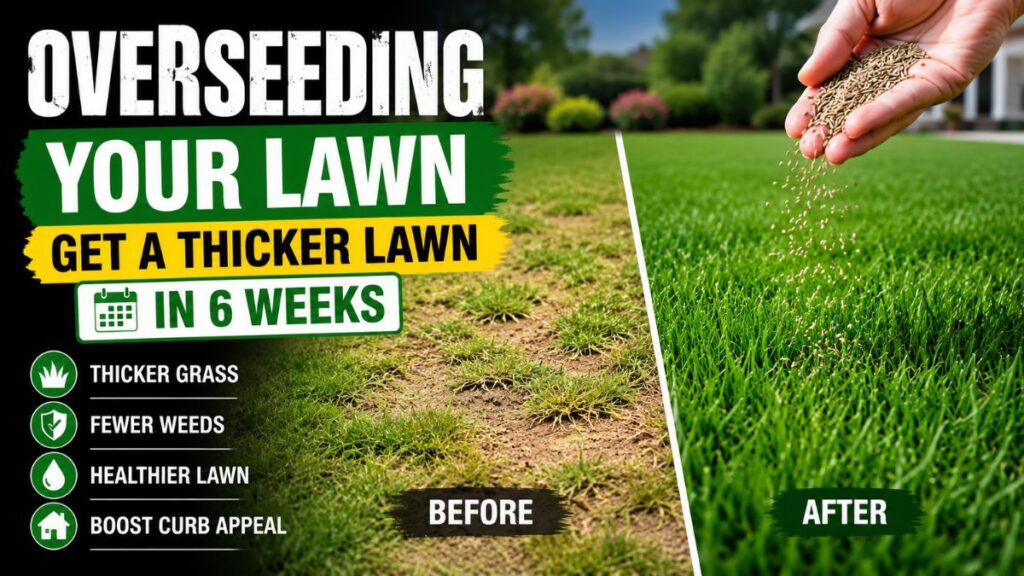
A thin, patchy lawn can make even the cleanest yard feel neglected. The good news? You don’t need to rip everything out and start over. With the right overseeding strategy, you can transform weak grass into a thick, healthy lawn in as little as six weeks.
Overseeding your lawn is one of the fastest and most affordable ways to improve lawn density, reduce bare spots, and create that lush green look homeowners love. Whether your yard looks tired after summer heat, foot traffic, or weeds, this simple lawn care method can bring it back to life naturally.
If you’ve never overseeded before, don’t worry. This beginner-friendly guide explains exactly what to do, when to do it, and how to get the best results fast.
What Is Overseeding and Why Does It Work?
Overseeding means spreading new grass seed directly over an existing lawn without tearing up the soil completely. The fresh seed fills in thin areas and helps your lawn grow thicker over time.
How Overseeding Improves Lawn Health
A dense lawn does more than look beautiful. It also:
- Crowds out weeds naturally
- Improves drought resistance
- Reduces soil erosion
- Creates a softer, greener appearance
- Helps recover damaged grass faster
When done correctly, new grass blends into your existing lawn and creates a fuller, healthier yard within weeks.
Best Time to Overseed a Lawn
Timing matters more than most people realize.
For cool-season grasses, early fall is ideal because:
- Soil is still warm
- Cooler air reduces stress
- Rainfall is usually more consistent
For warm-season grasses, late spring works best after temperatures rise steadily.
Avoid overseeding during extreme summer heat or freezing winter conditions.
How to Overseed Your Lawn for Thick Grass Fast
Step 1: Mow the Lawn Short
Before spreading seed, mow your lawn slightly shorter than normal. This helps the new seed reach the soil instead of getting trapped in tall grass.
Remove excess clippings and debris afterward for better seed-to-soil contact.
Step 2: Loosen the Soil
Compacted soil prevents seed germination. Improve your results by:
- Aerating the lawn
- Raking thin areas
- Removing dead grass buildup
This creates small openings where seeds can settle and grow properly.
Step 3: Choose the Right Grass Seed
Not all grass seed is the same. Match the seed type to your climate and sunlight conditions.
For example:
- Fescue works well in cooler climates
- Bermuda grass thrives in warmer regions
- Ryegrass germinates quickly for fast coverage
Using high-quality seed dramatically improves success rates.
Step 4: Spread Seed Evenly
Use a broadcast spreader for consistent coverage. Apply seed evenly across the lawn to avoid patchy growth.
If you’re unsure how much seed your yard needs, try this helpful internal tool:
Overseeding Calculator
It helps calculate the correct seed amount based on your lawn size.
Step 5: Water Properly During Germination
Watering is where many homeowners fail.
Keep the top layer of soil consistently moist during the first two weeks. Light watering once or twice daily is usually enough.
Avoid:
- Overwatering
- Letting soil dry out completely
- Heavy watering that washes seeds away
Once grass reaches a few inches tall, switch to deeper, less frequent watering.
Common Mistakes That Ruin Overseeding Results
Using Too Much Seed
More seed does not mean better results. Overcrowded seedlings compete for nutrients and weaken each other.
Always follow recommended seeding rates.
Skipping Soil Preparation
Throwing seed onto hard soil rarely works. Even basic raking or aeration can significantly improve germination.
Mowing Too Soon
New grass needs time to establish roots. Wait until the new blades reach around 3 inches before mowing.
Use sharp mower blades to avoid damaging tender grass.
Ignoring Fertilizer
Starter fertilizer gives seedlings the nutrients needed for rapid growth.
Look for fertilizers designed specifically for new grass establishment.
Overseeding Lawn Tips for Faster Growth
Keep Foot Traffic Low
Fresh seedlings are delicate. Avoid heavy walking on newly seeded areas for the first few weeks.
Monitor Weather Conditions
Rain helps, but heavy storms can wash away seed. If extreme weather is expected, consider lightly covering seeded areas with straw mulch.
Stay Consistent With Care
The first month is critical. Consistent watering and proper mowing habits make the difference between thin patches and thick green coverage.
With patience and the right routine, many lawns show visible improvement in under six weeks.
FAQs:
How long does overseeding take to work?
Most grass seed begins germinating within 7–21 days depending on the grass type and weather conditions.
Can I overseed without aerating?
Yes, but aeration greatly improves seed-to-soil contact and increases success rates, especially in compacted lawns.
Should I fertilize after overseeding?
Yes. A starter fertilizer helps young grass develop stronger roots and faster growth.
Conclusion:
A thick, green lawn doesn’t happen by accident — but it also doesn’t require expensive landscaping. Overseeding is one of the simplest ways to revive thin grass, improve lawn health, and dramatically boost curb appeal in just a few weeks.