
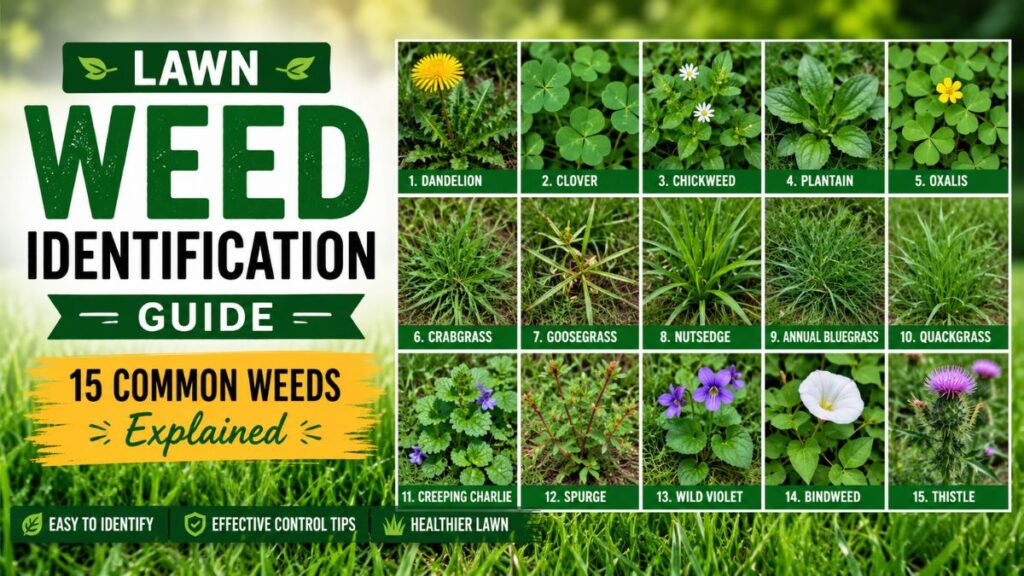
A beautiful lawn can quickly turn into a frustrating mess when weeds start spreading faster than your grass. What begins as a few harmless-looking plants can soon steal nutrients, sunlight, and water from your yard. That’s why having a reliable lawn weed identification guide is so important for homeowners who want a healthier, greener lawn without wasting time or money on the wrong treatments.
The tricky part? Many weeds look surprisingly similar in the early stages. Some grow low and spread quietly, while others shoot up almost overnight. Learning how to identify common lawn weeds early can help you stop infestations before they take over your yard.
Why Identifying Lawn Weeds Matters
Different Weeds Need Different Treatments
Not all weeds respond to the same herbicide or lawn care method. Misidentifying weeds can lead to:
- Poor weed control
- Damaged grass
- Wasted money
- More aggressive weed growth
Early Detection Saves Your Lawn
Most lawn weeds spread rapidly through seeds, runners, or underground roots. Spotting them early makes removal much easier and prevents future outbreaks.
Lawn Weed Identification Guide for Homeowners
Broadleaf Weeds
Broadleaf weeds usually have wide leaves and stand out clearly against grass.
1. Dandelion
- Bright yellow flowers
- Deep taproot
- Jagged leaves growing in a rosette pattern
Dandelions are one of the easiest weeds to recognize but also one of the hardest to fully remove if roots remain in the soil.
2. Clover
- Small round leaves in groups of three
- White or pink flowers
- Thrives in nitrogen-poor lawns
Clover spreads quickly and often signals unhealthy soil conditions.
3. Chickweed
- Tiny white flowers
- Weak stems that spread across soil
- Prefers cool, damp areas
This weed forms dense mats that smother grass.
4. Plantain
- Broad oval leaves
- Thick central veins
- Low-growing habit
Plantain survives heavy foot traffic better than many lawn grasses.
5. Oxalis
- Heart-shaped leaves
- Small yellow flowers
- Looks similar to clover
Often called yellow woodsorrel, Oxalis spreads aggressively during warm weather.
Grassy Weeds That Blend Into Lawns
Spotting Grass-Like Invaders
Grassy weeds are harder to identify because they resemble turfgrass.
6. Crabgrass
- Spreads outward like crab legs
- Thick clumps
- Appears in thin or bare lawn areas
Crabgrass thrives in summer heat and quickly takes over weak lawns.
7. Goosegrass
- Flat white center
- Tough stems
- Grows in compacted soil
Goosegrass survives mowing better than many other weeds.
8. Nutsedge
- Bright green blades
- Triangular stems
- Grows faster than surrounding grass
If your lawn looks uneven after mowing, nutsedge may be the reason.
9. Annual Bluegrass
- Light green color
- Produces seed heads quickly
- Appears during cooler seasons
This weed creates patchy, uneven turf.
10. Quackgrass
- Tall growth habit
- Rough leaves
- Spreads through underground rhizomes
Quackgrass is difficult to eliminate once established.
Invasive Weeds That Spread Fast
Lawn Weed Identification Guide for Aggressive Weeds
Some weeds can completely overrun a lawn if ignored.
11. Creeping Charlie
- Round scalloped leaves
- Purple flowers
- Creeping stems
This invasive weed thrives in shady, moist lawns.
12. Spurge
- Red stems
- Tiny leaves
- Forms low-growing mats
Spurge spreads rapidly in hot, dry conditions.
13. Wild Violet
- Heart-shaped leaves
- Purple flowers
- Thick underground roots
Wild violets are stubborn and difficult to control naturally.
14. Bindweed
- Arrow-shaped leaves
- White trumpet flowers
- Twining vines
Bindweed wraps around plants and steals sunlight.
15. Thistle
- Sharp spiny leaves
- Purple flowers
- Deep root system
Thistles spread through airborne seeds and underground roots.
How to Prevent Weeds From Taking Over
Simple Lawn Care Habits That Work
A thick, healthy lawn naturally prevents weeds from growing.
Keep Grass Healthy
- Mow at the correct height
- Water deeply but less frequently
- Fertilize regularly
Healthy grass crowds out most weeds naturally.
Fix Bare Spots Quickly
Thin areas invite weed seeds to germinate. Overseed damaged patches as soon as possible.
Improve Soil Quality
Compacted or nutrient-poor soil encourages weeds like clover and goosegrass.
Choosing the Right Weed Control Method
Manual Removal vs Herbicides
Small weed problems can often be handled manually. For larger infestations, selective herbicides may be necessary.
Before mixing herbicides, it’s important to get the correct ratio for safety and effectiveness. You can use the Weed Killer Mixing Calculator to accurately calculate the right amount for your lawn size and sprayer capacity.
FAQs:
What is the most common lawn weed?
Crabgrass is one of the most common lawn weeds because it spreads rapidly during summer.
How can I identify weeds in my lawn?
Look at the leaf shape, growth pattern, flower color, and root structure. A lawn weed identification guide can help narrow down the exact weed type.
Do weeds mean my lawn is unhealthy?
Often, yes. Many weeds thrive in thin, compacted, or nutrient-deficient lawns.
Conclusion:
Weeds are more than just an eyesore — they’re a warning sign that your lawn may need attention. The sooner you identify invasive plants, the easier it becomes to protect your grass and restore a healthy yard. By using this lawn weed identification guide, you’ll be able to recognize common weeds faster, choose better treatments, and prevent future problems before they spread.