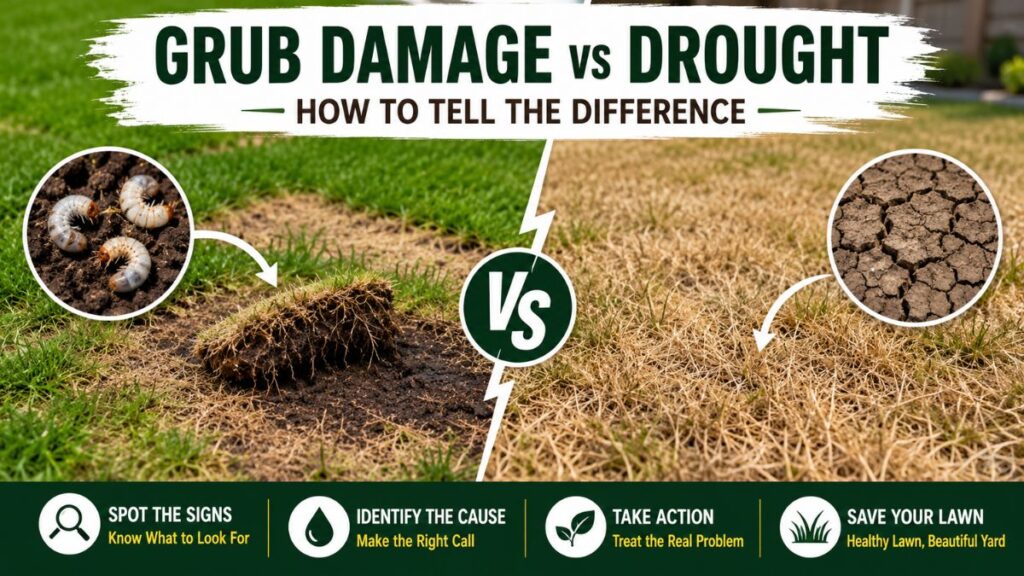
A brown, patchy lawn can trigger instant panic for any homeowner. But here’s the frustrating part: not every dying lawn has the same problem. Many people assume dry grass automatically means lack of water, while others rush to buy insect treatments they may not even need. The truth is, grub damage vs drought can look surprisingly similar at first glance — and treating the wrong issue can waste money, time, and even make your lawn worse.
If your grass suddenly looks stressed, thinning, or crispy, learning how to identify the real cause is essential. A few simple signs can help you quickly figure out whether your lawn needs water, pest control, or both.
Understanding the Difference Between Grub Damage and Drought
What Is Grub Damage?
Grubs are beetle larvae that live beneath the soil and feed on grassroots. As they chew through the root system, grass loses its ability to absorb water and nutrients.
Common lawn grubs include:
- Japanese beetle larvae
- June bug larvae
- Chafer beetles
When grub populations become severe, large lawn sections can die quickly.
What Happens During Drought Stress?
Drought stress occurs when grass doesn’t receive enough moisture for an extended period. Without sufficient water, grass blades turn brown and enter survival mode.
Unlike grub damage, drought usually affects lawns more evenly and develops gradually during hot weather.
Signs of Grub Damage in Lawn Areas
Grass Pulls Up Like Loose Carpet
One of the clearest signs of grub infestation is loose turf. Since grubs destroy roots, damaged grass can be lifted easily with little resistance.
Try this simple test:
- Grab a small patch of brown grass
- Gently tug upward
- If it rolls back like carpet, grubs are likely underneath
Healthy grass stays firmly anchored in the soil.
Irregular Brown Patches Appear
Grub damage often creates random, uneven brown spots throughout the yard. These patches may expand quickly during late summer or early fall.
You may also notice:
- Spongy soil texture
- Thinning turf
- Grass dying despite watering
Increased Animal Activity
Birds, raccoons, and skunks love feeding on grubs. If animals are suddenly digging holes in your lawn, it’s often a major warning sign.
This is one of the easiest ways to identify how to identify grub damage in grass before the lawn becomes severely damaged.
Signs Your Lawn Is Suffering From Drought
Grass Turns Grayish or Straw-Colored
Drought-stressed lawns usually change color gradually. Instead of random dead spots, the lawn often develops a dull gray-green appearance before turning brown.
Footprints Stay Visible
A healthy lawn bounces back after being walked on. Dry grass lacks moisture and elasticity, so footprints remain visible for several minutes.
This is a classic indicator when comparing drought stress vs grub infestation symptoms.
Soil Feels Hard and Dry
Check the soil using a screwdriver or garden trowel.
If the ground feels:
- Compact
- Cracked
- Extremely dry several inches down
Then drought is likely the main issue.
Grub Damage vs Drought: Side-by-Side Comparison
Key Differences to Watch
| Symptom | Grub Damage | Drought Stress |
|---|---|---|
| Grass pulls up easily | Yes | No |
| Random dead patches | Common | Less common |
| Animal digging activity | Frequent | Rare |
| Footprints remain visible | Sometimes | Common |
| Soil condition | Often moist | Usually dry |
| Lawn response after watering | Little improvement | Improves gradually |
Understanding these differences can prevent unnecessary treatments and save your lawn faster.
How to Confirm a Grub Problem
Dig and Inspect the Soil
The most reliable method is to inspect the soil directly.
Here’s how:
- Cut a square section of turf
- Lift it carefully
- Check the top 2–3 inches of soil
If you find more than 5–10 white C-shaped grubs per square foot, treatment may be necessary.
Use the Right Treatment Amount
If you decide to apply lawn insecticide, accurate coverage matters. Using too little may fail to control the infestation, while overapplying wastes product and money.
You can calculate the correct amount using the Lawn Insecticide Coverage Calculator tool.
How to Repair Your Lawn After Damage
For Drought Stress
To help drought-damaged grass recover:
- Water deeply 1–2 times weekly
- Mow at a higher height
- Avoid fertilizing during extreme heat
- Improve soil with compost or aeration
Patience is important because recovery may take several weeks.
For Grub Damage
If grubs are confirmed:
- Apply an appropriate grub treatment
- Water the product into the soil
- Reseed damaged patches
- Monitor for recurring infestations next season
Early treatment prevents widespread lawn destruction.
Preventing Future Lawn Problems
Build a Stronger Lawn
Healthy lawns naturally resist both pests and drought better.
Focus on:
- Proper watering habits
- Seasonal aeration
- Sharp mower blades
- Balanced fertilization
- Healthy soil structure
These simple practices improve root depth and lawn resilience.
Monitor Your Lawn Regularly
Weekly inspections can help you catch early warning signs before major damage occurs.
Pay close attention during:
- Hot summer months
- Late summer beetle season
- Extended dry periods
This proactive approach helps reduce costly lawn repairs later.
FAQs:
Can grass recover from grub damage?
Yes, mild grub damage can recover if treated early. Severe damage may require reseeding or replacing dead turf sections.
How many grubs are too many in a lawn?
Generally, more than 5–10 grubs per square foot may justify treatment depending on lawn health and visible damage.
Should I water brown grass every day?
No. Deep watering 1–2 times weekly is usually more effective than shallow daily watering.
Conclusion:
Learning the difference between grub damage vs drought can save your lawn from unnecessary treatments and expensive mistakes. While both problems create brown, stressed grass, the warning signs are very different once you know what to look for.