A bumpy, uneven lawn can make even the healthiest yard look neglected. You mow carefully, water regularly, and still your lawn feels rough underfoot and looks patchy from a distance. The secret many lawn professionals use to fix this problem isn’t expensive equipment or complete lawn replacement — it’s lawn topdressing.
Topdressing your lawn is one of the simplest ways to improve grass health, smooth uneven areas, and create that lush, golf-course appearance homeowners love. Best of all, it works gradually and naturally without tearing up your yard. If your lawn has dips, thin patches, or compacted soil, this technique could completely change how your yard looks this season.
What Is Lawn Topdressing?
A Simple Lawn Improvement Method
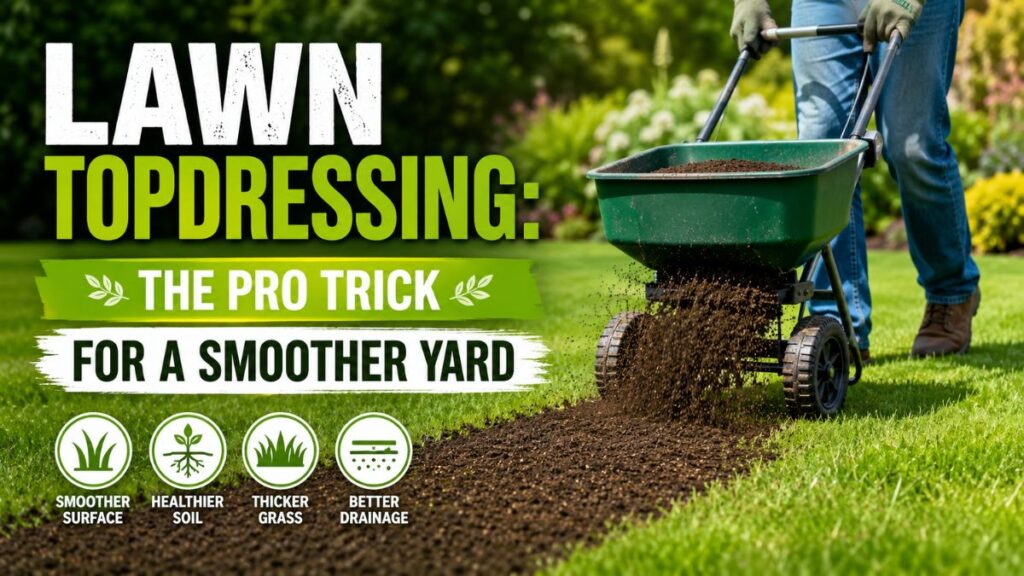
Lawn topdressing is the process of spreading a thin layer of soil, compost, or sand mixture over your grass. The material settles into low spots, improves soil quality, and encourages healthier root growth.
Most homeowners apply between ¼ to ½ inch of material across the lawn surface.
Why Professionals Use It
Topdressing helps lawns by:
- Smoothing uneven ground
- Improving soil structure
- Increasing nutrient availability
- Reducing thatch buildup
- Encouraging thicker grass growth
- Enhancing drainage in problem areas
It’s a proven method widely used on sports fields and golf courses because it delivers visible improvements without damaging healthy grass.
Benefits of Topdressing Your Lawn
Creates a Smoother Yard Surface
One of the biggest reasons homeowners try lawn topdressing is to eliminate annoying bumps and shallow dips. Over time, soil settles unevenly due to weather, foot traffic, pets, and mowing patterns.
A smoother lawn makes:
- Mowing easier
- Walking more comfortable
- Lawn stripes look cleaner
- Water distribution more even
Improves Soil Health Naturally
When you use compost-rich topdressing material, you add organic matter directly into the soil. This improves microbial activity and helps roots absorb nutrients more efficiently.
Healthy soil leads to:
- Greener grass
- Better drought resistance
- Stronger root systems
- Faster lawn recovery
Helps Thin or Patchy Grass
Topdressing can revive struggling areas by improving seed-to-soil contact during overseeding. Many lawn experts combine overseeding and topdressing together for faster thickening results.
Best Materials for Lawn Topdressing
Compost for Overall Lawn Health
Compost is often considered the best all-around topdressing material because it improves soil naturally while feeding grass roots.
Choose screened compost that is:
- Fine-textured
- Weed-free
- Fully decomposed
Sand for Leveling Uneven Lawns
Sand works best when your primary goal is leveling a bumpy lawn. However, pure sand should only be used carefully, especially on clay-heavy soil.
Soil and Compost Mix
Many homeowners get the best results using a balanced blend of:
- 40% compost
- 40% topsoil
- 20% sand
This combination improves both leveling and soil quality.
How to Topdress a Lawn Properly
Prepare the Lawn First
Before spreading material:
- Mow the grass shorter than usual
- Remove debris and leaves
- Dethatch if necessary
- Aerate compacted soil for better penetration
Aeration before topdressing significantly improves results because the material can work deeper into the soil.
Spread Thin Layers Evenly
The key to successful topdressing your lawn is patience. Never bury the grass under thick layers.
Use:
- A shovel for small lawns
- A compost spreader for large yards
- A leveling rake to distribute material evenly
Grass blades should still remain visible after spreading.
Water the Lawn After Application
Light watering helps settle the topdressing into the turf and prevents drying. Continue normal lawn care practices over the next few weeks.
When Is the Best Time to Topdress?
Cool-Season Grass Timing
For cool-season lawns like fescue or Kentucky bluegrass, early fall is usually ideal. Spring also works well if temperatures remain moderate.
Warm-Season Grass Timing
Warm-season grasses respond best during active growth in late spring or early summer.
Avoid topdressing during extreme heat or drought conditions because stressed grass recovers more slowly.
Common Lawn Topdressing Mistakes
Applying Too Much Material
This is the most common mistake homeowners make. Thick layers can suffocate grass and create bare patches.
Stick to light applications and repeat if necessary.
Using Poor-Quality Soil
Cheap soil blends may contain:
- Weed seeds
- Rocks
- Excess clay
- Unfinished compost
Always choose screened, high-quality material.
Ignoring Drainage Problems
Topdressing improves minor unevenness, but major drainage issues may require grading or drainage solutions first.
How Much Topdressing Material Do You Need?
Estimating material correctly can save money and prevent waste. Lawn size, depth, and unevenness all affect how much compost or soil you’ll need.
To make calculations easier, use the Lawn Topdressing Calculator tool before starting your project.
FAQs:
How often should you topdress a lawn?
Most lawns benefit from topdressing once a year. Severely uneven lawns may need multiple light applications over time.
Can I topdress and overseed at the same time?
Yes. Combining overseeding with topdressing improves seed contact and boosts germination success.
Is sand or compost better for topdressing?
Compost is better for improving soil health, while sand works best for leveling uneven lawns. Many experts recommend a blended mix.
Conclusion:
A smooth, healthy lawn doesn’t happen by accident. Lawn topdressing is one of the smartest long-term strategies for improving grass quality, fixing uneven ground, and creating a yard that looks professionally maintained.