Ever spent money on fertilizer, watered faithfully, and still ended up with a struggling lawn or garden? The problem may not be your effort — it could be your soil. Learning how to read a soil test report can completely change the way you care for your lawn, plants, or crops.
A soil test report is like a health checkup for your soil. It tells you exactly what nutrients are missing, whether your pH is balanced, and what your plants truly need to thrive. Instead of guessing, you make smarter decisions that save money, prevent over-fertilizing, and improve growth faster.
If soil reports have ever looked confusing or overly technical, don’t worry. This step-by-step guide breaks everything down in simple language so you can confidently understand your results and take action.
Why Soil Testing Matters Before Adding Fertilizer
Avoid Wasting Money on the Wrong Products
Many homeowners apply fertilizer without knowing what their soil already contains. That can lead to:
- Nutrient overload
- Weak grass growth
- Burned plants
- Poor root development
A soil test removes the guesswork.
Improve Lawn and Plant Health Naturally
Healthy soil creates:
- Greener lawns
- Stronger roots
- Better water retention
- Fewer pest and disease issues
Understanding your soil helps you fix problems at the source instead of treating symptoms.
Understanding the Basic Parts of a Soil Test Report
Most reports include similar sections. Once you know what each means, the report becomes much easier to read.
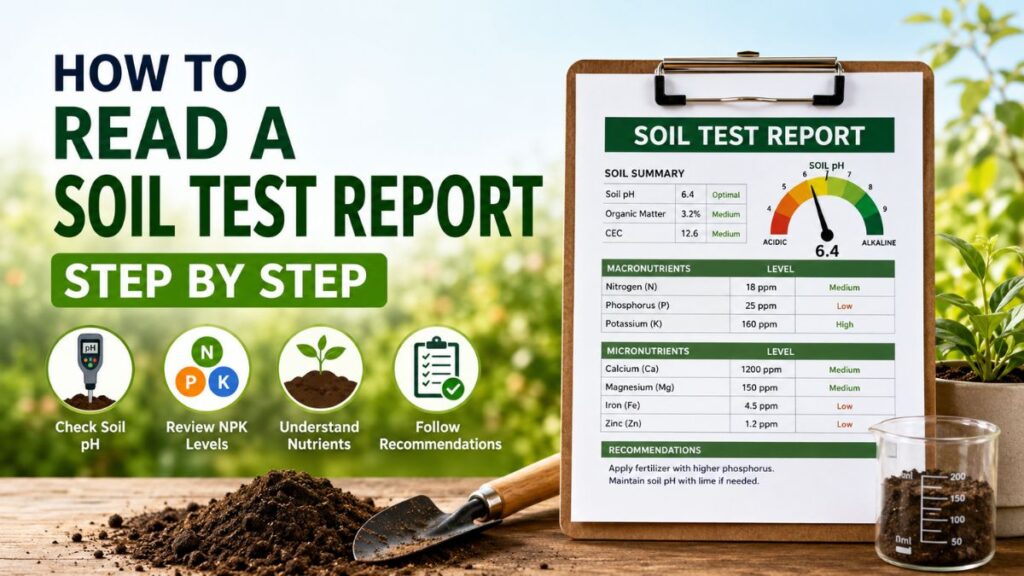
Soil pH Level
Soil pH measures how acidic or alkaline your soil is.
- pH below 7 = acidic
- pH above 7 = alkaline
- pH 6.0–7.0 = ideal for most lawns and plants
If your pH is too high or low, plants struggle to absorb nutrients even if those nutrients are present.
Common Fixes
- Add lime to raise pH
- Add sulfur to lower pH
Macronutrients: NPK Values
The three major nutrients are:
- Nitrogen (N)
- Phosphorus (P)
- Potassium (K)
These nutrients control growth, root strength, and overall plant health.
What Each Nutrient Does
| Nutrient | Main Function |
|---|---|
| Nitrogen | Leaf and grass growth |
| Phosphorus | Root development |
| Potassium | Disease resistance and stress tolerance |
Many reports show whether each nutrient level is low, medium, or high.
If you need help calculating the correct fertilizer ratio after reading your report, try the NPK Fertilizer Calculator for quick recommendations.
How to Read a Soil Test Report Step by Step
Step 1: Check the Soil pH First
This is the foundation of the entire report.
Even perfect fertilizer won’t work properly if the pH is off. Look for:
- Acidic soil warnings
- Lime recommendations
- Sulfur recommendations
Correcting pH often improves plant health faster than adding nutrients.
Step 2: Look at Nutrient Levels
Most reports classify nutrients as:
- Low
- Medium
- High
- Excessive
Focus first on nutrients marked “low.”
Don’t Overreact to High Levels
Adding more fertilizer to already high nutrient levels can damage soil balance and pollute groundwater.
Step 3: Understand Organic Matter Percentage
Organic matter improves:
- Soil structure
- Moisture retention
- Nutrient availability
Healthy soil usually contains around 3–6% organic matter.
Ways to Increase Organic Matter
- Add compost
- Leave grass clippings
- Use mulch naturally
- Grow cover crops
Step 4: Read Micronutrient Results
Micronutrients are needed in smaller amounts but still matter greatly.
Common micronutrients include:
- Iron
- Zinc
- Calcium
- Magnesium
- Sulfur
Deficiencies can cause yellowing leaves, slow growth, or weak roots.
Common Soil Test Terms Explained
Cation Exchange Capacity (CEC)
This measures how well soil holds nutrients.
- Low CEC = sandy soil
- High CEC = clay-heavy soil
Higher CEC usually means better nutrient retention.
Buffer pH
Buffer pH helps determine how much lime is needed to change soil acidity.
This number matters mainly when your soil is highly acidic.
Base Saturation
This shows the percentage of nutrients attached to soil particles.
It helps experts evaluate overall soil balance.
For most homeowners, focusing on pH and nutrient levels is usually enough.
Soil Test Recommendations: What They Really Mean
Fertilizer Recommendations Are Guidelines
Your report may recommend:
- Pounds of fertilizer per 1,000 square feet
- Specific nutrient ratios
- Soil amendments
Always follow application rates carefully.
Timing Matters Too
Different nutrients work best during certain seasons.
For example:
- Nitrogen often works best in active growing periods
- Lime may take months to fully adjust soil pH
Patience is important.
Mistakes People Make When Reading Soil Reports
Ignoring pH Problems
Many people focus only on fertilizer numbers and skip pH corrections.
That’s one of the biggest reasons lawns stay unhealthy.
Applying Everything at Once
Adding too many amendments together can overwhelm plants and create imbalance.
Instead:
- Correct major deficiencies first
- Retest soil yearly
- Make gradual improvements
Using Generic Fertilizer Without Reading the Report
Every lawn and garden is different.
A soil report gives personalized guidance that generic fertilizer schedules cannot provide.
How Often Should You Test Your Soil?
Recommended Testing Schedule
For most lawns and gardens:
- Test every 2–3 years
- Test yearly if problems persist
- Test before major landscaping projects
Regular testing helps maintain long-term soil health instead of constantly fixing emergencies.
FAQs:
How do I know if my soil pH is too low?
Most plants struggle when soil pH drops below 6.0. Your soil report will usually label acidic conditions clearly.
Can I fix poor soil quickly?
Some improvements happen fast, but full soil health restoration often takes months or seasons of consistent care.
Should I test soil every year?
Most homeowners only need testing every 2–3 years unless they have persistent lawn or garden problems.
Conclusion:
Learning how to read a soil test report may seem intimidating at first, but it’s one of the smartest things you can do for a healthier lawn or garden. Once you understand pH, nutrient levels, and soil recommendations, you stop guessing and start making informed decisions that actually work.