
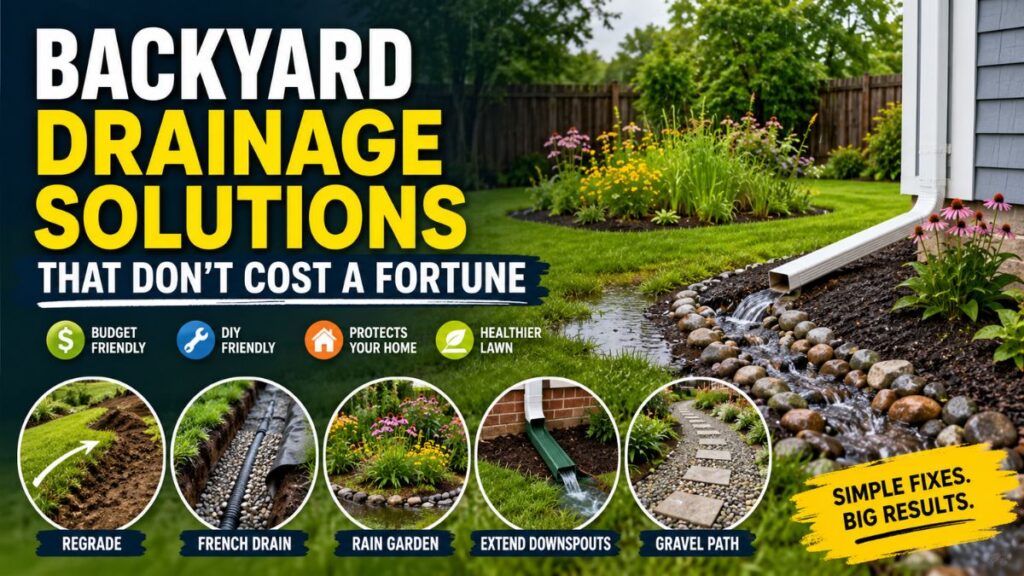
A soggy backyard can quietly ruin everything you love about your outdoor space. From muddy footprints and dead grass to mosquito infestations and water pooling near your home’s foundation, poor drainage becomes an expensive headache if ignored. The good news? Effective backyard drainage solutions do not always require a contractor, heavy machinery, or a five-figure budget.
In fact, many homeowners can solve common drainage issues with simple, affordable fixes that improve lawn health, protect property value, and make the yard usable again. Whether you are dealing with standing water after rain or a constantly muddy lawn, these practical solutions can help you regain control without draining your wallet.
Why Backyard Drainage Problems Happen
Before fixing the problem, it helps to understand what causes water buildup in the first place.
Poor Yard Grading
If your yard slopes toward your house instead of away from it, rainwater naturally collects in low spots.
Common signs include:
- Water puddles near the foundation
- Muddy patches that stay wet for days
- Basement dampness or leaks
Compacted Soil
Heavy foot traffic and clay-rich soil prevent water from soaking into the ground properly.
Blocked Gutters or Downspouts
Sometimes the issue starts above ground. Overflowing gutters dump excess water directly into your yard.
Cheap Backyard Drainage Solutions That Actually Work
You do not need to install a complex underground drainage system to see results. Start with these budget-friendly improvements.
Regrade Small Low Spots in Your Yard
Use Topsoil to Redirect Water
One of the easiest ways to improve drainage is by filling shallow dips with topsoil.
Steps to follow:
- Identify areas where water collects
- Add a mix of topsoil and compost
- Create a gentle slope away from structures
- Reseed grass if needed
Even a slight grade adjustment can dramatically reduce standing water.
Measure the Correct Slope
If you are unsure how much slope your lawn needs, use the Lawn Drainage Slope Calculator tool:
Lawn Drainage Slope Calculator
It helps determine the proper drainage angle before you start digging.
Install a Simple French Drain
A DIY Drainage Fix for Wet Yards
A French drain is one of the most effective low-cost drainage methods for homeowners.
It works by:
- Collecting excess water in a gravel-filled trench
- Redirecting water away from problem areas
- Preventing puddles and soil erosion
Basic materials include:
- Perforated pipe
- Gravel
- Landscape fabric
- Shovel
This project can often be completed in a weekend.
Where French Drains Work Best
French drains are ideal for:
- Waterlogged lawns
- Areas near patios
- Side yards with poor runoff
- Sloped properties
Use Rain Gardens for Natural Drainage
Turn a Wet Area Into a Beautiful Feature
Instead of fighting water, why not work with it?
A rain garden is a shallow planted area designed to absorb runoff naturally. Native plants with deep roots help soak up excess moisture while adding beauty to your landscape.
Good plant options include:
- Ornamental grasses
- Ferns
- Black-eyed Susans
- Swamp milkweed
Rain gardens are eco-friendly and surprisingly affordable to create.
Extend Your Downspouts
Stop Water From Dumping Near Your Foundation
This is one of the most overlooked drainage fixes.
Short downspouts allow roof runoff to collect near your home, causing pooling and erosion.
A simple extension can redirect water several feet away from your house for very little cost.
Affordable Materials to Use
Popular options include:
- Flexible plastic extenders
- Buried corrugated pipe
- Splash blocks
Most homeowners can install these in under an hour.
Create Gravel Drainage Paths
Improve Water Flow Naturally
If certain sections of your yard stay muddy, a gravel path can help water move through the area more effectively.
Gravel drainage paths are:
- Low maintenance
- Budget friendly
- Easy for DIY beginners
- Great for side yards
For better results, combine gravel with landscape fabric underneath to reduce weed growth.
Aerate Your Lawn
Help Water Soak Into the Soil
Compacted soil traps water at the surface.
Lawn aeration removes small plugs of soil, allowing air, nutrients, and water to penetrate deeper into the ground.
This simple fix can:
- Reduce puddling
- Improve grass growth
- Strengthen root systems
- Prevent runoff
For smaller yards, manual aeration tools are inexpensive and effective.
Smart Ways to Prevent Future Drainage Problems
Keep Gutters Clean
Clogged gutters can create major drainage issues during heavy rain.
Clean them at least twice a year to maintain proper water flow.
Avoid Overwatering
Sometimes homeowners accidentally create drainage problems by watering too frequently.
Use a simple rule:
- Water deeply but less often
Mulch Bare Soil Areas
Mulch helps reduce erosion and slows water movement during storms.
Organic mulch options include:
- Bark chips
- Straw
- Pine needles
Signs You May Need Professional Help
While most drainage issues can be fixed affordably, some situations require expert assistance.
Call a professional if you notice:
- Foundation cracks
- Severe flooding
- Persistent basement leaks
- Large-scale erosion
Addressing serious water issues early can prevent thousands in future repair costs.
FAQs:
What is the cheapest way to improve backyard drainage?
Regrading low spots with topsoil and extending downspouts are usually the most affordable solutions.
Do French drains really work?
Yes. Properly installed French drains effectively redirect water away from wet areas and prevent pooling.
How do I fix standing water in my yard naturally?
Rain gardens, aeration, and improving soil quality can help absorb excess water naturally.
Conclusion:
A wet, muddy backyard does not have to become a permanent problem or a financial burden. With the right backyard drainage solutions, you can protect your lawn, improve your outdoor space, and prevent costly water damage using affordable DIY methods.