A beautiful lawn can quickly turn into a patchy, brown, unhealthy mess almost overnight. One week your grass looks lush and green, and the next you notice strange spots, thinning patches, or fuzzy growth spreading across the yard. The truth is, common lawn diseases are far more widespread than most homeowners realize — and ignoring the warning signs can lead to expensive repairs later.
The good news? Most lawn diseases can be stopped early with the right care and treatment. Once you learn how to identify the symptoms, improve lawn conditions, and apply the proper solutions, your grass has a much better chance of recovering quickly.
In this guide, you’ll learn how to recognize the most common lawn diseases, what causes them, and the best ways to treat and prevent future outbreaks.
What Causes Lawn Diseases?
Lawn diseases are usually caused by fungi that thrive under specific environmental conditions. Poor lawn maintenance often creates the perfect environment for these problems to spread.
Common Triggers of Lawn Fungus
Several factors increase the risk of lawn disease:
- Excess moisture or poor drainage
- Overwatering at night
- Thick thatch buildup
- Poor airflow
- Overfertilizing
- Dull mower blades damaging grass
Warm temperatures combined with humidity are especially dangerous for cool-season grasses.
Why Early Detection Matters
Most fungal lawn diseases spread rapidly once conditions are favorable. Catching symptoms early can:
- Prevent large dead patches
- Reduce treatment costs
- Save healthy grass from infection
- Improve overall lawn recovery time
Brown Patch Disease
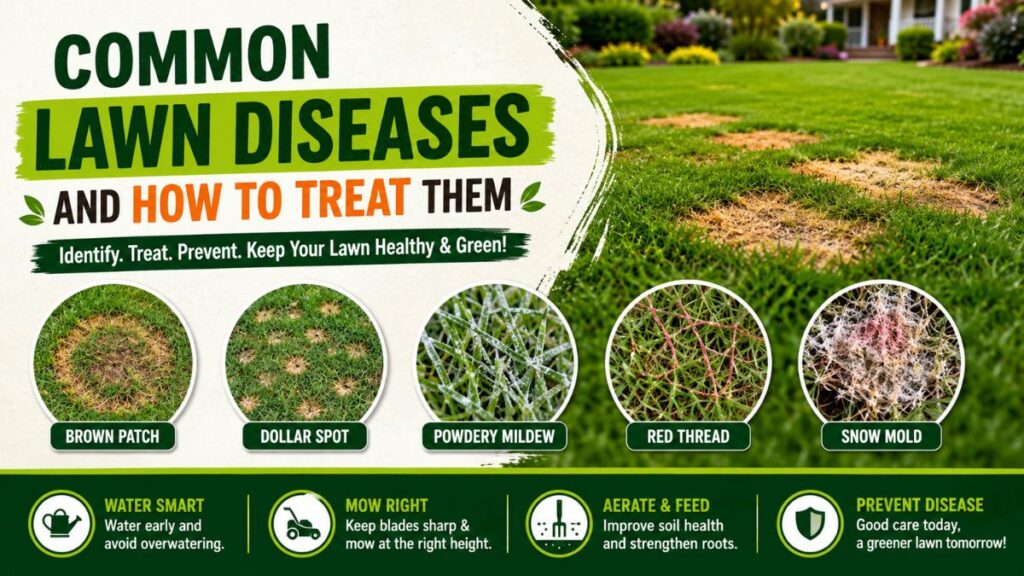
Brown patch is one of the most recognizable lawn diseases. It often appears during hot, humid weather.
Symptoms of Brown Patch
Look for:
- Circular brown patches
- Yellow rings around affected areas
- Thin or wilted grass
- Rapid spreading after rain
This disease commonly attacks tall fescue and ryegrass lawns.
How to Treat Brown Patch
To stop brown patch from spreading:
- Water early in the morning
- Avoid excessive nitrogen fertilizer
- Improve air circulation
- Apply a fungicide if the outbreak becomes severe
Keeping the lawn dry overnight is one of the most effective prevention methods.
Dollar Spot Fungus
Dollar spot creates small straw-colored patches across the lawn that resemble silver dollar coins.
Signs of Dollar Spot
Typical symptoms include:
- Small tan spots
- Bleached grass blades
- Cobweb-like fungus in the morning dew
It usually develops in lawns lacking proper nutrients.
Best Treatment Methods
Here’s how to control dollar spot:
- Feed the lawn with balanced fertilizer
- Mow regularly with sharp blades
- Reduce excessive moisture
- Use targeted fungicide treatments when necessary
Healthy, actively growing grass is far more resistant to this disease.
Powdery Mildew on Grass
Powdery mildew looks exactly like its name suggests — a dusty white coating on grass blades.
Common Lawn Diseases and How to Treat Them Naturally
Why Powdery Mildew Appears
This disease thrives in:
- Shaded lawns
- Humid conditions
- Areas with poor airflow
Grass weakened by lack of sunlight becomes highly vulnerable.
Natural Treatment Tips
You can often control powdery mildew naturally by:
- Trimming nearby trees for sunlight
- Improving ventilation
- Watering less frequently
- Avoiding heavy nitrogen applications
In severe cases, fungicides may still be needed.
Red Thread Lawn Disease
Red thread is especially common during cool, wet weather.
How to Identify Red Thread
Symptoms include:
- Pink or reddish threads on grass
- Irregular dead patches
- Slow lawn growth
This disease rarely kills grass permanently but can make lawns look unhealthy.
How to Fix Red Thread
The best solution is often simple lawn care improvement:
- Apply nitrogen fertilizer carefully
- Improve drainage
- Avoid overwatering
- Continue mowing normally
Most lawns recover quickly once growing conditions improve.
Snow Mold After Winter
Snow mold commonly appears after snow melts in late winter or early spring.
Types of Snow Mold
There are two main forms:
- Gray snow mold
- Pink snow mold
Both leave behind matted, discolored patches.
Treatment and Prevention
To prevent snow mold:
- Avoid heavy fertilizer before winter
- Continue mowing until grass stops growing
- Remove thick leaf buildup
- Gently rake affected areas in spring
Good winter lawn preparation significantly lowers risk.
Preventing Lawn Diseases Year-Round
The healthiest lawns are naturally more resistant to disease.
Smart Lawn Care Habits
Follow these best practices consistently:
- Water deeply but infrequently
- Mow at the correct height
- Aerate compacted soil
- Remove excess thatch
- Use disease-resistant grass varieties
Proper maintenance often prevents fungal outbreaks before they start.
Use the Right Fungicide Amount
Applying too little fungicide may not work, while applying too much wastes money and can damage grass. To make treatment easier, use the Lawn Fungicide Coverage Calculator to determine the correct amount for your lawn size.
When to Call a Lawn Care Professional
Some lawn diseases become too severe for DIY treatment.
Signs You Need Expert Help
Consider professional assistance if:
- The disease keeps returning
- Large lawn areas die repeatedly
- Fungicides aren’t working
- You can’t identify the problem
An experienced lawn care specialist can diagnose the exact disease and recommend targeted treatment plans.
FAQs:
What is the most common lawn disease?
Brown patch is one of the most common lawn diseases, especially during warm and humid weather.
Can lawn fungus go away on its own?
Minor fungal issues sometimes improve when weather conditions change, but proper lawn care usually speeds recovery and prevents spreading.
How often should I apply lawn fungicide?
It depends on the product and disease severity. Always follow label instructions and apply only when necessary.
Conclusion:
Lawn diseases can feel frustrating when they suddenly appear, but most problems become manageable once you understand the warning signs and causes. The key is acting early, improving lawn care habits, and treating outbreaks before they spread across the entire yard.