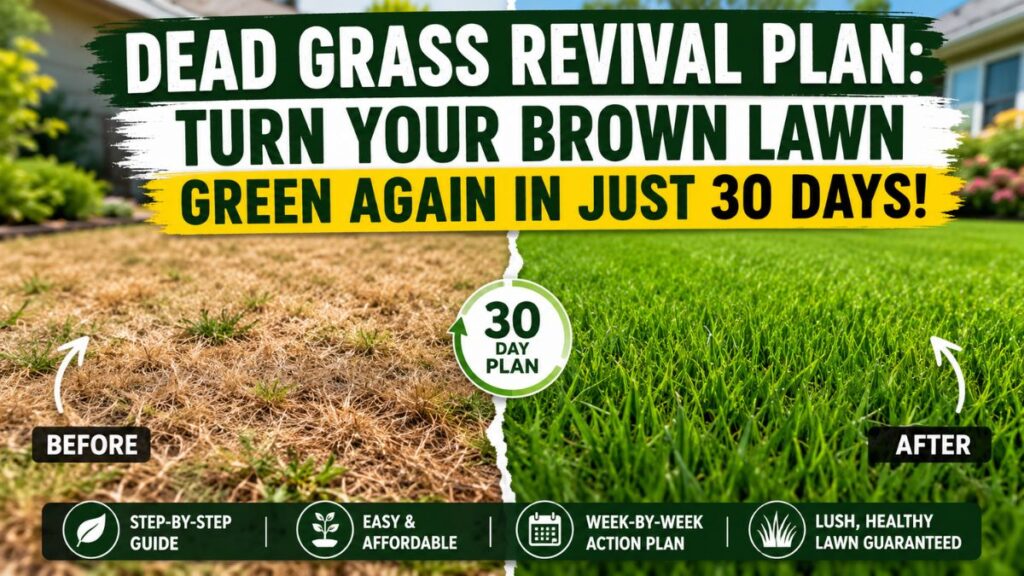
A lawn can go from green and healthy to dry, patchy, and lifeless faster than most homeowners expect. One week of extreme heat, poor watering habits, or compacted soil can leave your yard looking completely dead. The good news? A full lawn replacement is not always necessary. With the right strategy, you can revive struggling grass in just one month.
This dead grass revival plan is designed for homeowners who want fast, affordable, and realistic results without complicated lawn care routines. Whether your yard has brown patches, thinning grass, or dry spots, these proven steps can help restore thick, healthy growth before the season ends.
Diagnose the Real Cause of Dead Grass
Before adding seed or fertilizer, you need to understand why the lawn declined in the first place. Treating the wrong issue often wastes time and money.
Check for Common Lawn Problems
Dead-looking grass may actually be dormant, diseased, or dehydrated. Look closely for signs like:
- Crunchy brown blades that pull out easily
- Bare patches with compacted soil
- Fungus spots or strange discoloration
- Thin grass growing unevenly
- Standing water after rain
These symptoms usually point to one or more issues:
- Poor watering habits
- Soil compaction
- Heat stress
- Pet damage
- Weed competition
Test Soil Moisture and Drainage
Push a screwdriver into the ground after watering. If it barely enters the soil, compaction is likely preventing roots from growing properly.
For lawns recovering after drought, deep watering matters more than frequent shallow watering. Aim for slow soaking sessions that encourage roots to grow deeper.
Remove Truly Dead Grass
Use a rake to clear out fully dead material. This improves airflow and creates space for new seed growth. If more than 50% of the lawn is damaged, overseeding the entire yard may produce better results.
Week-by-Week Dead Grass Revival Plan
A healthy lawn transformation does not happen overnight. Following a structured schedule delivers better and longer-lasting results.
Week 1: Prepare the Lawn
Start with cleanup and soil improvement.
Tasks to complete:
- Rake away dead grass and debris
- Loosen compacted soil
- Aerate high-traffic areas
- Add a thin layer of compost
This stage is critical for improving seed-to-soil contact and encouraging root recovery.
Week 2: Seed and Feed Strategically
Choose grass seed that matches your climate and existing lawn type. Spread seed evenly over damaged areas and lightly cover it with topsoil.
Apply a starter fertilizer to support root development. Avoid over-fertilizing because excessive nitrogen can burn recovering grass.
For homeowners wondering how to revive dead grass fast, consistency matters more than expensive products.
Week 3 & 4: Water Correctly for Deep Growth
Water lightly twice daily during seed germination. Once new grass appears, reduce frequency and water more deeply.
A proper watering routine should:
- Keep soil consistently moist
- Avoid puddles or runoff
- Encourage deeper root growth
Morning watering works best because it reduces fungal risks during warmer days.
Maintain a Thick and Healthy Lawn Long-Term
Reviving a lawn is only half the battle. Keeping it green requires better maintenance habits moving forward.
Adjust Your Mowing Routine
One of the biggest lawn mistakes is cutting grass too short. Taller grass shades the soil, retains moisture, and naturally suppresses weeds.
Follow these mowing tips:
- Never remove more than one-third of the blade height
- Keep mower blades sharp
- Leave short clippings behind for nutrients
Prevent Future Brown Patches
If your lawn suffered from summer stress, prevention is key. Healthy lawns recover faster from drought, foot traffic, and weeds.
Helpful strategies include:
- Seasonal overseeding
- Annual aeration
- Balanced fertilization
- Deep weekly watering
Many homeowners searching for the best way to repair dead lawn patches overlook soil health. Healthy soil creates stronger, greener grass naturally.
Use Smart Lawn Planning Tools
Planning lawn repairs becomes much easier when you know exactly how much seed, soil, or fertilizer you need. The free Lawn Renovation Planner tool helps estimate materials and organize your lawn restoration project efficiently.
If you are trying to restore brown grass naturally or looking for a 30 day lawn recovery guide, creating a simple renovation plan can save both time and money.
FAQs:
Can dead grass come back to life?
If the roots are still alive, dormant grass can recover with proper watering and care. Completely dead grass usually needs reseeding.
How long does it take to revive a damaged lawn?
Most lawns show visible improvement within 2 to 4 weeks when watered, fertilized, and seeded correctly.
Should I water dead grass every day?
New seed may need daily moisture, but established lawns recover better with deeper, less frequent watering.
Conclusion:
A brown, damaged lawn does not have to stay that way. With the right cleanup, reseeding, watering, and maintenance plan, you can turn dry, patchy grass into a lush green yard in just 30 days. Small consistent actions create the biggest results.