A lush, green lawn in the middle of a scorching heatwave might seem impossible—but what if a few smart changes could transform your dry, patchy grass into a thriving summer oasis? The truth is, most lawns don’t fail because of the heat—they fail because of poor care during extreme conditions. With the right Summer Lawn Care Tips, you can protect your grass, conserve water, and keep your yard looking vibrant even under blazing sun.
Smart Watering Strategies for Heatwave Survival
When and How to Water Your Lawn
Watering is the most critical factor during extreme heat—but timing matters more than quantity.
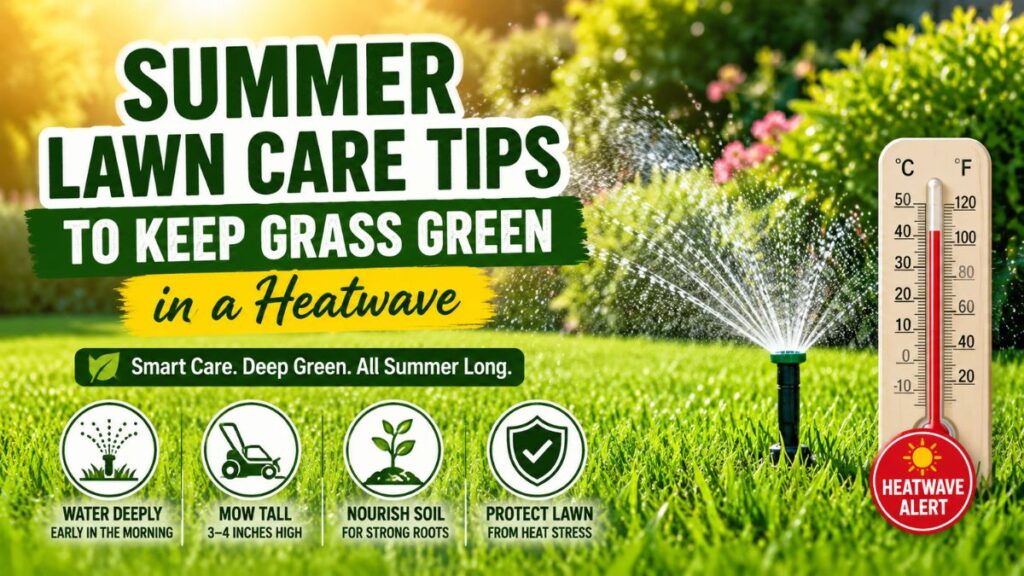
- Water early in the morning (before 9 AM) to reduce evaporation
- Avoid evening watering to prevent fungal growth
- Aim for deep, infrequent watering (2–3 times per week)
Step-by-Step Lawn Watering Guide
- Check soil moisture (insert a screwdriver into the ground)
- Water until the top 6–8 inches of soil is moist
- Adjust frequency based on rainfall and temperature
To make this easier, use this tool:
Lawn Watering Calculator
Benefits of Proper Watering
- Encourages deeper root growth
- Reduces drought stress
- Saves water and lowers bills
Mowing and Maintenance Best Practices
Ideal Mowing Height in Summer
Cutting your grass too short during a heatwave is one of the biggest mistakes.
- Keep grass taller (around 3–4 inches)
- Taller blades provide shade to the soil
- Reduces moisture loss and weed growth
Lawn Care Tips for Hot Weather Maintenance
- Sharpen mower blades for clean cuts
- Mow less frequently during extreme heat
- Leave grass clippings (mulching) to retain moisture
Common Mistakes to Avoid
❌ Scalping the lawn (cutting too short)
❌ Mowing during midday heat
❌ Removing too much grass at once
These simple lawn care tips for hot weather can dramatically improve your lawn’s resilience.
Soil Health, Fertilizing & Heat Protection
Should You Fertilize During a Heatwave?
Fertilizing incorrectly can burn your lawn.
- Avoid heavy fertilization in peak heat
- Use slow-release fertilizers if needed
- Apply only when grass is actively growing
Summer Lawn Maintenance Guide for Soil Health
Healthy soil is your lawn’s best defense.
- Add organic matter like compost
- Aerate compacted soil (if not too dry)
- Use wetting agents for better water absorption
Heatwave Lawn Care Guide: Extra Protection Tips
- Apply a light layer of mulch around edges
- Reduce foot traffic on stressed grass
- Watch for signs of heat stress:
- Wilting blades
- Footprints staying visible
- Yellow or brown patches
Safety Precautions
- Avoid chemical treatments during extreme heat
- Wear protective gear when applying fertilizers
- Keep pets and children off treated areas
These steps form a reliable heatwave lawn care guide to keep your grass alive and thriving.
FAQs:
1. How often should I water my lawn during a heatwave?
Water deeply 2–3 times per week, depending on soil type and temperature.
2. Is it okay to mow during extreme heat?
Yes, but only in the early morning or evening—and never cut more than one-third of the grass height.
3. Why is my lawn turning brown even after watering?
It could be due to shallow watering, poor soil health, or heat stress. Focus on deep watering and proper mowing.
Conclusion:
A green lawn during a heatwave isn’t about luck—it’s about strategy. By following these Summer Lawn Care Tips, you can protect your grass from extreme stress, improve soil health, and maintain a lush, healthy yard all season long.