
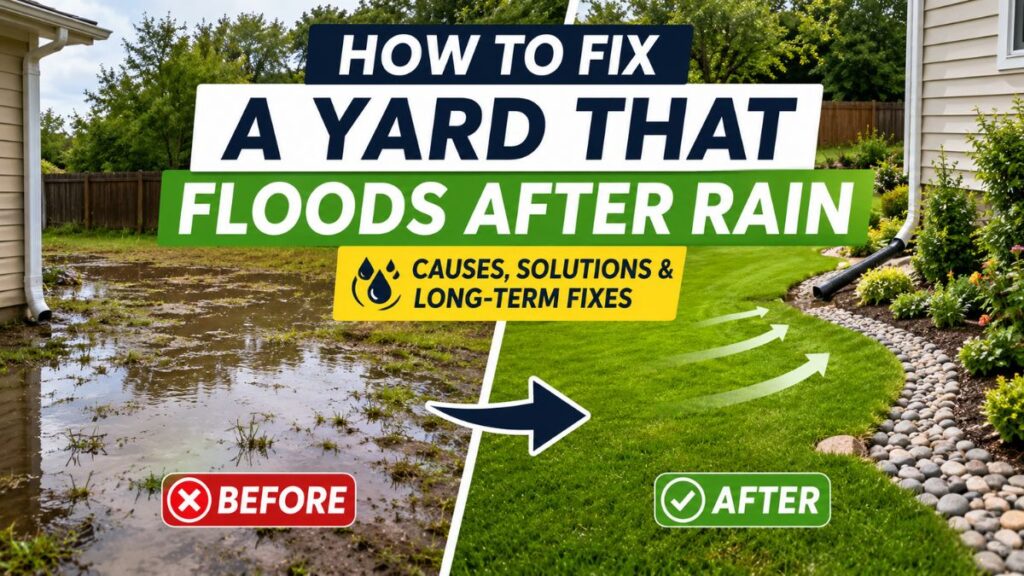
A flooded yard can turn your beautiful outdoor space into a muddy, unusable mess almost overnight. One heavy storm, and suddenly you’re dealing with standing water, dying grass, mosquito problems, and even potential foundation damage. If you’ve been searching for how to fix a yard that floods after rain, the good news is that most drainage issues can be solved with the right combination of grading, soil improvement, and smart landscaping.
Whether your lawn turns into a swamp after every shower or only struggles during major storms, understanding the root cause is the first step toward a healthier, drier yard. In this guide, you’ll learn practical and affordable ways to stop water from pooling and protect your property long-term.
Understand Why Your Yard Floods
Before fixing the issue, you need to know what’s causing it.
Poor Yard Grading
One of the most common reasons for standing water is improper slope. If your yard tilts toward your house or has low spots, rainwater naturally collects there instead of draining away.
Signs of poor grading include:
- Water pooling near your foundation
- Muddy patches that stay wet for days
- Grass dying in certain areas
- Water flowing toward patios or walkways
Compacted Soil Problems
Hard, compacted soil prevents water from soaking into the ground. Clay-heavy soil is especially known for poor drainage because it absorbs water slowly.
Blocked or Insufficient Drainage
Sometimes the issue is simple:
- Clogged gutters
- Downspouts dumping water too close to the house
- Blocked French drains
- Overwhelmed storm drains
Even small blockages can create major flooding after heavy rain.
Simple Ways to Fix Yard Drainage Problems
Regrade the Lawn for Better Water Flow
If your yard slopes incorrectly, regrading may be the most effective solution.
Ideally, your lawn should slope away from your home at least 2–3 inches every 10 feet. This helps move water safely away from structures.
You can estimate the proper slope using the Lawn Drainage Slope Calculator tool: Lawn Drainage Slope Calculator
Fill Low Spots
Minor puddling areas can often be fixed by adding a soil and compost mix.
Best Materials for Filling Depressions
Use:
- Topsoil
- Compost
- Sand blend for heavy clay soil
Avoid using pure sand alone because it can create drainage inconsistencies.
Aerate Compacted Soil
Aeration creates small holes in the lawn that allow water, oxygen, and nutrients to penetrate the soil more effectively.
Core aeration works especially well if:
- Your lawn feels hard underfoot
- Water sits on the surface
- Grass roots appear shallow
Annual aeration can dramatically improve drainage over time.
Install Smart Drainage Solutions
Some yards require more advanced fixes, especially in areas with heavy rainfall.
Install a French Drain
A French drain is one of the best long-term solutions for yard flooding.
How French Drains Work
A trench filled with gravel and perforated pipe redirects water away from problem areas.
French drains work well for:
- Constantly soggy lawns
- Water pooling near foundations
- Sloped properties
Although installation requires effort, the results are often permanent.
Extend Downspouts Away From the House
Many homeowners overlook this simple fix.
If gutters release water directly beside your foundation, flooding becomes much worse during storms.
Downspouts should extend at least:
- 6–10 feet away from your home
This small improvement can prevent major drainage headaches.
Add a Dry Creek Bed
Dry creek beds combine drainage and landscaping beauty.
They:
- Redirect runoff naturally
- Reduce erosion
- Add visual appeal to the yard
Decorative rocks and native plants can make the area look intentional rather than problematic.
Landscaping Ideas That Help Prevent Flooding
Choose Water-Absorbing Plants
Some plants naturally soak up excess moisture better than others.
Great options include:
- Switchgrass
- Daylilies
- Ferns
- River birch trees
Native plants usually perform best because they’re adapted to local rainfall conditions.
Create a Rain Garden
A rain garden is a shallow planted area designed to collect and absorb stormwater runoff.
Benefits of a Rain Garden
- Reduces standing water
- Filters pollutants naturally
- Supports pollinators
- Improves curb appeal
Rain gardens are especially useful for low areas where water naturally collects.
How to Fix a Yard That Floods After Rain Without Spending a Fortune
Not every drainage solution requires heavy equipment or expensive contractors.
Budget-Friendly Drainage Fixes
Try these affordable improvements first:
- Clean gutters regularly
- Add soil to low spots
- Aerate compacted areas
- Use mulch to reduce erosion
- Redirect downspouts
- Plant moisture-loving vegetation
Small changes often make a surprisingly big difference.
Know When to Call a Professional
If flooding causes:
- Foundation cracks
- Basement leaks
- Severe erosion
- Large standing water areas
…it may be time to hire a drainage contractor or landscape grading specialist.
Professional assessments can identify hidden issues that DIY methods may miss.
Prevent Future Yard Flooding
Once your lawn drainage improves, maintenance is key.
Regular Yard Maintenance Tips
To keep your yard dry:
- Clean gutters seasonally
- Inspect drainage systems after storms
- Avoid excessive soil compaction
- Re-seed damaged grass areas
- Maintain proper lawn grading
Consistent upkeep prevents small problems from turning into expensive repairs.
FAQs:
Why does my yard stay flooded for days after rain?
Poor drainage, compacted soil, clay-heavy ground, or improper grading are usually the main causes of long-lasting standing water.
Is a French drain worth it for yard flooding?
Yes. A properly installed French drain can provide a long-term solution for severe drainage issues and protect your property from water damage.
Can I fix a soggy yard without digging?
In some cases, yes. Aeration, soil improvement, extending downspouts, and planting water-absorbing vegetation can significantly improve drainage without major excavation.
Conclusion:
A flooded yard is more than an inconvenience — it can damage your lawn, attract pests, and even threaten your home’s foundation. The good news is that most drainage issues can be corrected with practical, step-by-step improvements.
Start small by identifying problem areas, improving soil drainage, and redirecting runoff. If needed, move on to advanced solutions like French drains or rain gardens. The sooner you tackle the issue, the easier it becomes to restore a healthy, usable yard.