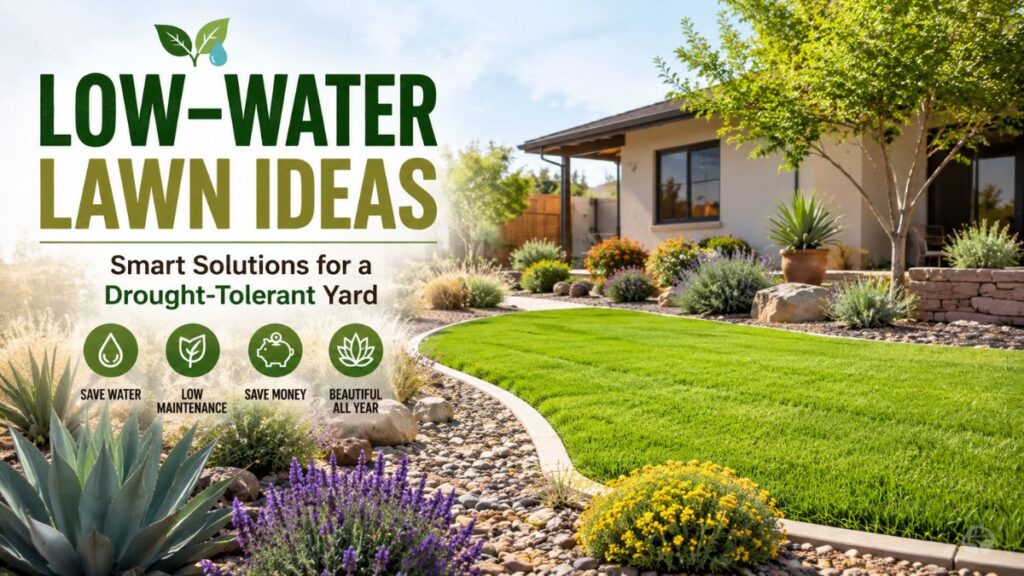
A lush green yard doesn’t have to come with sky-high water bills or constant stress during dry weather. More homeowners are now searching for low-water lawn ideas that keep outdoor spaces beautiful while using far less water. And honestly, it makes sense. Traditional lawns can consume thousands of gallons every year, especially during hot summers and drought restrictions.
The good news? You don’t need to sacrifice curb appeal to create a drought-friendly landscape. With a few smart changes, your yard can stay attractive, easier to maintain, and surprisingly affordable. From drought-resistant grass choices to creative landscaping alternatives, there are practical ways to design a yard that thrives with less water.
If your lawn constantly turns brown, feels expensive to maintain, or struggles during dry spells, these ideas can completely change how you care for your outdoor space.
Choose Drought-Resistant Grass Varieties
Not all grass types need the same amount of water. Some varieties naturally survive heat and dry conditions much better than traditional turf.
Best Grass Types for Dry Climates
Consider switching to grasses specifically bred for drought tolerance, such as:
- Bermuda grass
- Zoysia grass
- Buffalo grass
- Bahia grass
- Fine fescue
These grasses develop deeper root systems, helping them stay greener with less watering.
Why Native Grasses Work Better
Native or region-friendly grasses are already adapted to local weather conditions. That means:
- Less watering
- Fewer fertilizers
- Better disease resistance
- Lower maintenance overall
This is one of the smartest long-term low-water lawn ideas for homeowners who want sustainability without constant upkeep.
Smart Landscaping Alternatives That Reduce Water Use
Sometimes the best lawn solution involves using less grass altogether. Reducing turf areas can dramatically lower water consumption while adding visual interest to your yard.
Add Decorative Gravel and Mulch
Gravel paths, bark mulch, and stone features create texture while helping soil retain moisture.
Benefits include:
- Reduced evaporation
- Fewer weeds
- Minimal maintenance
- Modern landscape appearance
Mulch is especially useful around trees, flower beds, and shrubs where moisture retention matters most.
Use Ground Covers Instead of Traditional Turf
Ground covers are excellent for dry climates and difficult lawn areas.
Popular options include:
- Creeping thyme
- Clover
- Sedum
- Moss rose
- Ice plant
These plants spread naturally and often require far less water than grass.
Create Functional Outdoor Spaces
Replacing sections of lawn with patios, seating areas, or garden beds can make your yard more useful while reducing irrigation needs.
Ideas include:
- Stone walkways
- Fire pit areas
- Raised garden beds
- Outdoor dining spaces
A drought-tolerant yard can still feel vibrant and welcoming without endless grass.
Low-Water Lawn Ideas That Still Look Green
Many homeowners worry that drought-friendly landscaping means dry, lifeless yards. Thankfully, modern lawn strategies prove otherwise.
Water Deeply but Less Frequently
Frequent shallow watering weakens grass roots. Instead:
- Water early in the morning
- Water deeply 1–2 times weekly
- Encourage deeper root growth
Deep roots help grass survive heat much better.
Mow Higher During Hot Weather
Cutting grass too short exposes soil to sunlight and increases moisture loss.
Experts recommend:
- Keeping grass slightly taller during summer
- Never removing more than one-third of blade height at once
- Using sharp mower blades for cleaner cuts
This simple habit can improve drought resistance almost immediately.
Improve Soil Health Naturally
Healthy soil retains water far better than compacted or nutrient-poor soil.
Easy improvements include:
- Adding compost
- Aerating annually
- Using organic matter
- Avoiding excessive chemical treatments
Better soil means less watering and healthier grass.
Install Efficient Irrigation Systems
A smarter watering system can save both water and money.
Use Drip Irrigation for Garden Areas
Drip irrigation delivers water directly to plant roots instead of spraying large areas unnecessarily.
Advantages include:
- Reduced water waste
- Better moisture control
- Lower evaporation
- Healthier plants
This method works especially well for flower beds, shrubs, and vegetable gardens.
Upgrade to Smart Sprinkler Controllers
Modern irrigation systems can automatically adjust watering schedules based on weather conditions.
Some smart systems can:
- Detect rainfall
- Reduce overwatering
- Schedule watering during cooler hours
- Monitor soil moisture levels
These upgrades often pay for themselves through lower utility bills.
If you want to estimate how much water your lawn uses and how much you could potentially save, try this helpful tool: Lawn Watering Cost Calculator
Add Drought-Tolerant Plants for Extra Curb Appeal
A beautiful drought-tolerant yard isn’t just about grass. Strategic plant choices can make your landscape look richer and more colorful year-round.
Best Low-Water Plants for Landscaping
Consider adding:
- Lavender
- Agave
- Yucca
- Salvia
- Coneflowers
- Ornamental grasses
These plants thrive in heat while needing minimal irrigation.
Group Plants by Water Needs
This landscaping method, often called hydrozoning, helps avoid wasting water.
For example:
- Keep thirsty plants together
- Place drought-resistant plants in sunny areas
- Reduce irrigation overlap
Small design changes like this can dramatically improve water efficiency.
FAQs:
What is the best grass for a drought-tolerant lawn?
Buffalo grass, Bermuda grass, and Zoysia grass are among the best choices because they require less water and tolerate heat well.
How often should I water a low-water lawn?
Most drought-tolerant lawns only need deep watering once or twice per week, depending on climate and soil conditions.
Can a lawn stay green with less water?
Yes. Proper grass selection, healthier soil, deeper watering, and smart mowing practices can keep lawns greener with significantly less water.
Conclusion:
Creating a beautiful yard no longer means wasting huge amounts of water every week. With the right combination of drought-resistant grass, smarter irrigation, healthy soil, and creative landscaping, your lawn can stay attractive while using far fewer resources.