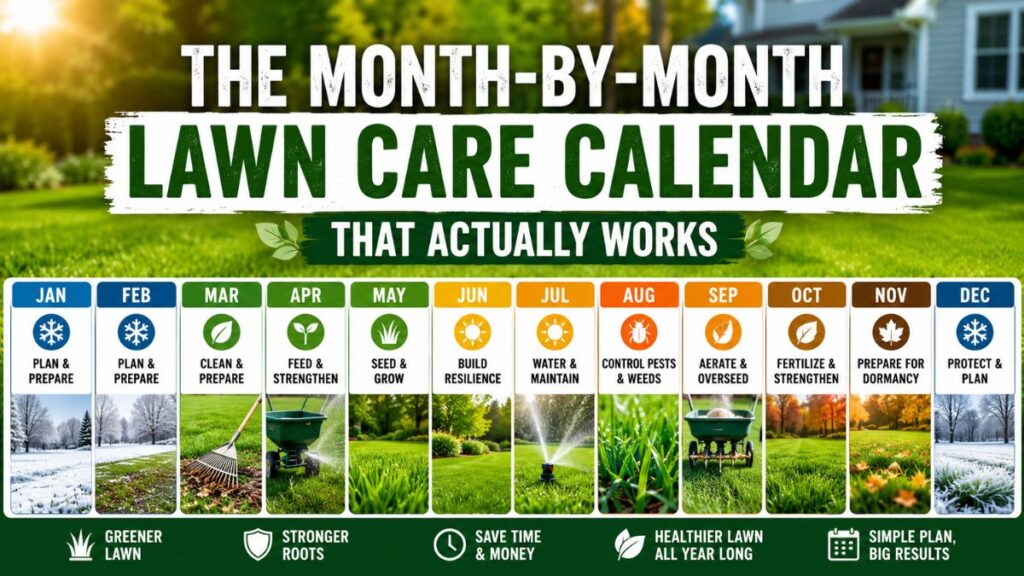
A lush, green lawn doesn’t happen by accident—it’s the result of timing, consistency, and knowing exactly what your grass needs each month. If you’ve ever felt overwhelmed trying to keep your yard healthy year-round, you’re not alone. That’s where The Month-by-Month Lawn Care Calendar comes in—a simple, practical roadmap that removes the guesswork and helps you grow a lawn you’ll actually be proud of.
Spring: Wake Your Lawn Up the Right Way
Spring is when your lawn comes back to life—and how you treat it now sets the tone for the entire year.
Early Spring (March–April): Clean & Prep
Start with the basics:
- Rake away dead grass, leaves, and debris
- Lightly dethatch if buildup is thick
- Test soil pH to identify nutrient needs
Mid to Late Spring (April–May): Feed & Strengthen
- Apply a balanced fertilizer
- Overseed thin or patchy areas
- Begin regular mowing (don’t cut too short!)
Best Practice:
- Water deeply but less frequently to encourage deep roots
Common Mistake to Avoid:
- Over-fertilizing early can burn young grass
Summer: Protect & Maintain in the Heat
Summer can stress your lawn, especially during heatwaves. The goal here is survival and strength.
Early Summer (June): Build Resilience
- Raise mower height to prevent stress
- Apply slow-release fertilizer
- Monitor for weeds and pests
This phase is crucial in any summer lawn maintenance tips calendar.
Peak Summer (July–August): Minimize Damage
- Water early in the morning (before 9 AM)
- Avoid mowing during extreme heat
- Spot-treat weeds instead of blanket spraying
Safety Tip:
- Avoid applying chemicals during high temperatures—it can damage grass and harm pets
Smart Watering Strategy
- 1–1.5 inches of water per week
- Use sprinklers efficiently to avoid runoff
Common Mistake:
- Watering daily (leads to shallow roots and weak grass)
Fall & Winter: Repair, Strengthen & Prepare
This is the most important phase for long-term lawn success.
Early Fall (September–October): Repair & Grow
- Aerate compacted soil
- Overseed for thicker growth
- Apply fall fertilizer for root development
Late Fall (November): Prepare for Dormancy
- Continue mowing until growth stops
- Remove fallen leaves regularly
- Apply a winterizing fertilizer
Winter (December–February): Protect & Plan
- Avoid walking on frozen grass
- Keep lawn free of heavy debris
- Plan your next year-round lawn care plan step by step
Expert Tip:
- Winter is the perfect time to analyze what worked and what didn’t
Step-by-Step Lawn Care Process (Simple Version)
Follow this easy cycle:
- Spring: Clean → Feed → Seed
- Summer: Protect → Water → Maintain
- Fall: Aerate → Repair → Fertilize
- Winter: Protect → Plan
For a personalized plan based on your location and grass type, try this tool:
👉 https://lawncalcpro.com/tool/lawn-care-schedule-calculator/
Key Benefits of Following This Calendar
- Healthier, greener lawn all year
- Fewer weeds and pests
- Stronger root system
- Saves time and money long-term
Common Mistakes to Avoid
- Cutting grass too short
- Ignoring soil health
- Overwatering or underwatering
- Skipping seasonal fertilization
FAQs:
1. How often should I follow The Month-by-Month Lawn Care Calendar?
You should check and follow it monthly, adjusting based on weather and grass type.
2. Can beginners follow this lawn care plan?
Absolutely! This guide is designed as a spring lawn care schedule for beginners and works for all experience levels.
3. What’s the most important month for lawn care?
Fall is critical because it strengthens roots and prepares your lawn for the next year.
Conclusion:
A beautiful lawn isn’t about working harder—it’s about working smarter. By following The Month-by-Month Lawn Care Calendar, you’ll know exactly what to do and when to do it, eliminating confusion and boosting results.