
Buying a lawn mower sounds simple—until you realize the long-term costs can quietly drain your wallet. Many homeowners focus only on the upfront price, but the real difference between a gas and electric mower shows up over the next five years. Fuel, maintenance, battery replacement, repairs, and electricity bills all add up faster than most people expect.
If you’re trying to decide which option gives the best value, this gas vs electric mower cost breakdown will help you avoid expensive mistakes and choose the smarter investment for your lawn and budget.
Understanding the Upfront Purchase Cost
Gas Mowers Usually Cost Less Initially
Traditional gas lawn mowers often have a lower starting price compared to premium cordless electric models.
Typical price ranges:
- Gas push mower: $300–$600
- Electric cordless mower: $350–$900
- Electric corded mower: $150–$300
At first glance, gas mowers may seem like the budget-friendly winner. But the purchase price is only part of the equation.
Electric Models Include Battery Technology
Cordless electric mowers cost more because of:
- Lithium-ion batteries
- Charging systems
- Brushless motors
- Lightweight materials
These features improve convenience and reduce long-term maintenance expenses.
Gas vs Electric Mower Cost Breakdown Over 5 Years
Fuel and Electricity Costs
Gas mowers require regular fuel purchases throughout mowing season.
Average 5-year fuel costs:
- Around $40–$80 per year
- Total: roughly $200–$400
Electric mowers consume far less energy.
Average electricity costs:
- About $10–$20 annually
- Total: roughly $50–$100 over five years
For homeowners mowing weekly, electric models can cut operating costs dramatically.
Maintenance Expenses Add Up Quickly
Gas engines require regular servicing to stay reliable.
Common gas mower maintenance includes:
- Oil changes
- Spark plug replacement
- Air filter changes
- Carburetor cleaning
- Fuel stabilizer
- Engine tune-ups
Estimated 5-year maintenance cost:
- $250–$500
Electric mowers are much simpler mechanically.
Typical electric mower maintenance:
- Blade sharpening
- Basic cleaning
- Occasional battery care
Estimated 5-year maintenance cost:
- $50–$150
This is where many homeowners start seeing major savings with electric models.
Battery Replacement vs Engine Repairs
Electric Battery Replacement Can Be Expensive
One concern with cordless electric mowers is battery lifespan.
Most batteries last:
- 3–5 years depending on use
- Longer if stored properly
Replacement battery costs:
- $100–$300
However, many users never need a replacement within five years.
Gas Engines Often Need Repairs
Older gas mowers commonly develop issues like:
- Hard starting
- Fuel line clogs
- Pull cord problems
- Carburetor failures
Repair costs can quickly exceed expectations, especially if professional service is required.
Which Mower Saves More Money Long-Term?
Electric Mowers Win for Most Small and Medium Yards
For average homeowners, electric mowers usually cost less overall after five years.
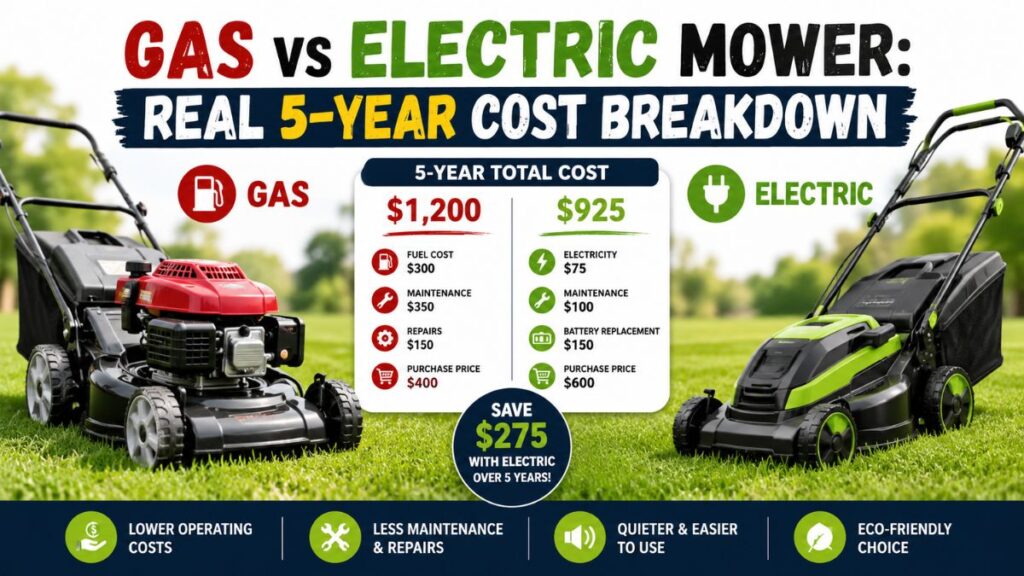
Estimated total 5-year ownership costs:
Gas Mower
- Purchase price: $400
- Fuel: $300
- Maintenance: $350
- Repairs: $150
Estimated total: $1,200
Electric Mower
- Purchase price: $600
- Electricity: $75
- Maintenance: $100
- Battery replacement: $150
Estimated total: $925
That difference becomes even larger when fuel prices rise.
Gas Mowers Still Have Advantages
Gas mowers may still make sense if you:
- Maintain very large properties
- Need extended runtime
- Frequently mow thick or overgrown grass
- Prefer maximum cutting power
For heavy-duty mowing, gas engines remain extremely capable.
Convenience and Lifestyle Factors Matter Too
Electric Mowers Are Easier to Use
Many homeowners switch to electric because they are:
- Quieter
- Easier to start
- Lighter to push
- Cleaner to store
- Low maintenance
You simply charge the battery and mow.
Gas Mowers Require More Effort
Gas models involve:
- Fuel storage
- Engine maintenance
- Louder operation
- Pull-start systems
- Winterizing procedures
Some users don’t mind these tasks, but others find them frustrating over time.
Environmental Impact and Noise Comparison
Electric Mowers Are More Eco-Friendly
Electric mowers produce:
- No direct emissions
- Less air pollution
- Lower carbon impact
They’re also significantly quieter, making early morning mowing less disruptive.
Gas Mowers Produce More Emissions
Small gas engines contribute surprisingly high pollution levels compared to their size. They also create far more noise during operation.
For environmentally conscious homeowners, electric models are often the better choice.
How to Calculate Your Own Mowing Costs
Every lawn is different, and your real expenses depend on:
- Yard size
- Mowing frequency
- Local fuel prices
- Electricity rates
- Battery lifespan
To estimate your personal savings, try this helpful internal tool:
👉 Gas vs Electric Lawn Mower Cost Calculator
It can quickly show which mower type makes the most financial sense for your situation.
FAQs:
Is an electric mower really cheaper than gas?
In most cases, yes. Electric mowers typically have lower fuel, maintenance, and repair costs over time.
How long do electric mower batteries last?
Most lithium-ion batteries last between 3 and 5 years with proper care and storage.
Are gas mowers more powerful than electric?
Generally, yes. Gas mowers still provide stronger performance for very large lawns and thick grass conditions.
Conclusion:
The cheapest mower upfront is not always the cheapest mower long-term. While gas mowers may cost less initially, ongoing fuel and maintenance expenses often make them more expensive over five years.
For most homeowners, electric mowers offer lower ownership costs, easier maintenance, quieter operation, and a more convenient mowing experience. Before buying your next mower, calculate the full long-term cost—not just the sticker price.