A healthy lawn can turn brown, patchy, and lifeless almost overnight — and most homeowners blame heat or watering mistakes first. But in many cases, the real culprit is hiding beneath the grass. A proper lawn pests identification chart can help you spot destructive insects before they ruin your yard and cost hundreds in repairs.
Some lawn bugs chew roots underground, while others suck moisture from grass blades or attract animals digging through your lawn. The tricky part? Many pest problems look similar at first glance. Learning to identify these insects early can save your grass and prevent long-term damage.
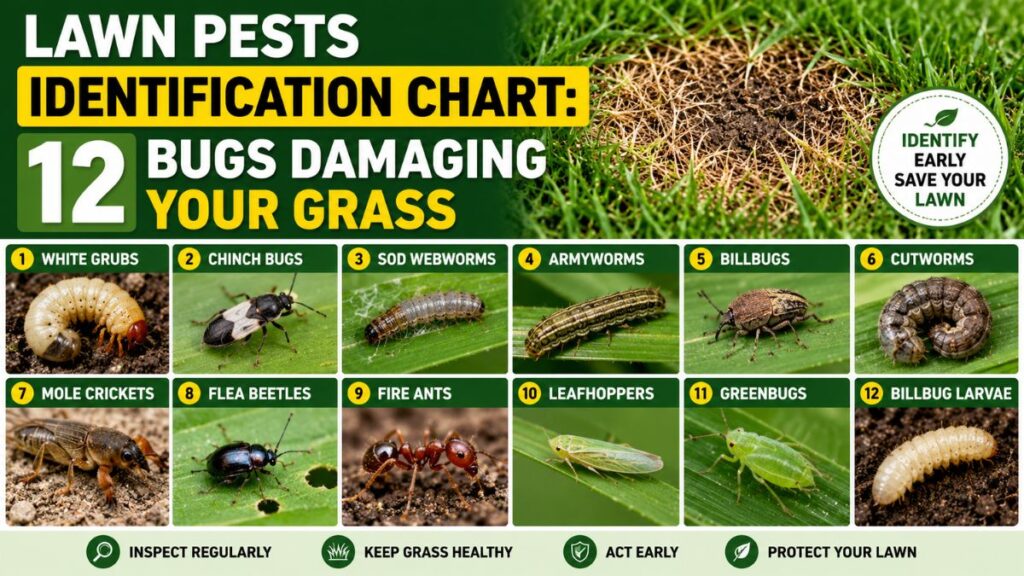
Below is a simple, practical guide to 12 common lawn pests damaging grass and how to recognize them quickly.
White Grubs
What They Look Like
White grubs are small, C-shaped larvae with creamy white bodies and brown heads.
Signs of Damage
- Brown dead patches that peel up easily
- Spongy turf underfoot
- Increased activity from birds, raccoons, or moles
White grubs feed on grassroots, making them one of the most destructive lawn pests.
Chinch Bugs
Lawn Pests Identification Chart for Chinch Bugs
Adult chinch bugs are tiny black insects with white wings folded over their backs.
Signs of Damage
- Yellow patches that turn brown
- Damage spreads during hot weather
- Grass appears drought-stressed even after watering
These pests suck juices from grass blades and inject toxins into the turf.
Sod Webworms
What They Look Like
Sod webworm larvae are grayish caterpillars that hide in silk tunnels near the soil.
Signs of Damage
- Small brown spots across the lawn
- Grass blades chewed unevenly
- Increased moth activity at dusk
They commonly attack cool-season grasses during warm months.
Armyworms
What They Look Like
Armyworms are striped caterpillars that travel in groups.
Signs of Damage
- Rapidly disappearing grass
- Ragged grass blade edges
- Large dead patches appearing almost overnight
These pests can destroy a lawn in just days if left untreated.
Billbugs
What They Look Like
Adult billbugs have long snouts, while larvae resemble white grubs without legs.
Signs of Damage
- Hollow grass stems
- Grass breaks off easily when pulled
- Patchy brown turf in summer
Billbugs are especially common in Kentucky bluegrass lawns.
Cutworms
What They Look Like
Cutworms are thick caterpillars that curl into a C-shape when disturbed.
Signs of Damage
- Grass clipped near the soil line
- Circular dead spots
- Damage appears overnight
They feed mostly at night, making them difficult to spot.
Mole Crickets
What They Look Like
Mole crickets have large digging front legs similar to moles.
Signs of Damage
- Raised tunnels across the lawn
- Loose soil
- Grass roots severed underground
These pests damage lawns both by feeding and tunneling.
Flea Beetles
What They Look Like
Tiny shiny beetles that jump when disturbed.
Signs of Damage
- Tiny holes in grass blades
- Weak, thinning grass
- Dry-looking turf
Flea beetles are more common during warm, dry weather.
Fire Ants
What They Look Like
Reddish ants that build visible dirt mounds.
Signs of Damage
- Uneven soil mounds
- Damaged grassroots near colonies
- Painful stings when disturbed
Besides lawn damage, fire ants can make yards unsafe for pets and children.
Leafhoppers
What They Look Like
Small wedge-shaped insects that move quickly when touched.
Signs of Damage
- Yellow streaks on grass blades
- Thinning turf
- Slow lawn recovery
Leafhoppers weaken grass by feeding on plant fluids.
Greenbugs
What They Look Like
Small pale-green aphids often found clustered together.
Signs of Damage
- Yellowing grass tips
- Sticky residue on grass
- Gradual thinning patches
Greenbugs are especially harmful during dry conditions.
Hunting Billbug Larvae
What They Look Like
Legless white larvae hidden inside grass stems or soil.
Signs of Damage
- Sudden brown patches in summer
- Weak grass roots
- Turf pulls up easily
Many homeowners mistake billbug larvae damage for drought stress.
How to Confirm Lawn Pest Problems
Check the Soil
Cut a small square of turf and inspect the soil underneath. Many lawn pests live below the surface.
Look for Activity at Night
Some insects feed after sunset. Use a flashlight to inspect suspicious patches.
Watch for Animal Digging
Birds, skunks, or raccoons digging your lawn often signal grub activity.
Best Ways to Prevent Lawn Pest Damage
Healthy lawns resist pests better than stressed lawns.
Simple Prevention Tips
- Mow at the correct height
- Avoid overwatering
- Remove excess thatch
- Fertilize properly
- Inspect lawns regularly during summer
If treatment becomes necessary, the Lawn Insecticide Coverage Calculator can help you determine the correct amount of insecticide for your yard size.
When to Use Lawn Insecticides
Treat Early for Best Results
Early treatment prevents widespread lawn destruction.
Avoid Overusing Chemicals
Applying too much insecticide can damage beneficial insects and stress your grass further.
Always follow label instructions carefully.
FAQs:
What is the most damaging lawn pest?
White grubs are often considered the most damaging because they destroy grassroots beneath the surface.
How do I know if bugs are killing my grass?
Look for brown patches, loose turf, chewed blades, and increased animal digging activity.
Can a damaged lawn recover from pests?
Yes. Most lawns recover if pests are treated early and the grass receives proper care afterward.
Conclusion:
Lawn pests rarely announce themselves clearly until serious damage appears. That’s why using a reliable lawn pests identification chart is one of the smartest ways to protect your yard. The earlier you recognize the warning signs, the easier and cheaper the solution becomes.