A lawn can look healthy on the surface while secretly struggling underneath. If your grass feels spongy, dries out quickly, or starts thinning for no obvious reason, lawn thatch could be the hidden problem. Many homeowners ignore it until their once-green yard becomes patchy and weak.
The good news? Thatch isn’t always bad. A thin layer can actually protect your grass. The real challenge is knowing when lawn thatch becomes harmful and how to remove it before it damages your yard. In this guide, you’ll learn the warning signs, the best dethatching methods, and simple ways to keep your lawn thick and healthy year-round.
What Is Lawn Thatch?
Understanding the Layer Beneath Your Grass
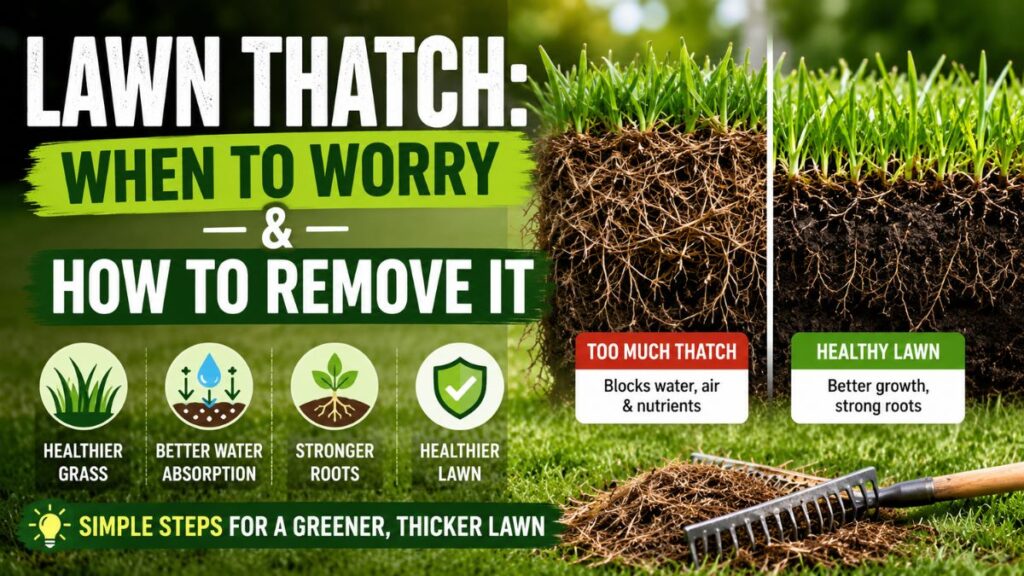
Thatch is a layer of dead grass stems, roots, and organic debris that builds up between the soil and the green grass blades.
A small amount of thatch is normal and even beneficial because it helps:
- Retain moisture
- Protect roots from temperature swings
- Reduce soil compaction
However, once the layer becomes thicker than about half an inch, it starts creating problems.
Why Excessive Thatch Happens
Heavy thatch buildup usually develops because of:
- Overwatering
- Overfertilizing
- Poor soil microbes
- Frequent shallow watering
- Excessive pesticide use
- Fast-growing grass varieties
Cool-season grasses like Kentucky bluegrass are especially prone to thatch accumulation.
Signs Your Lawn Thatch Problem Needs Attention
Your Grass Feels Soft or Spongy
Walk across your lawn. Does it feel bouncy like a sponge? That’s one of the biggest clues that thick thatch is trapping moisture and air near the surface.
Water Runs Off Instead of Soaking In
One major symptom of how to remove lawn thatch naturally becomes necessary is poor water absorption. Thick thatch acts like a barrier, preventing moisture from reaching the roots.
You may notice:
- Puddles forming quickly
- Dry soil beneath wet grass
- Uneven lawn growth
Grass Looks Thin or Unhealthy
Even with watering and fertilizer, heavily thatched lawns often struggle because roots stay shallow and weak.
Watch for:
- Brown patches
- Increased weeds
- Disease outbreaks
- Thin grass growth
Checking Thatch Thickness
Use a small shovel or garden trowel to dig a shallow section of turf.
Measure the brown layer between the grass and soil:
- Less than ½ inch: Healthy
- More than ½ inch: Time to dethatch
Best Ways to Remove Thatch From Your Lawn
Use a Dethatching Rake
A manual dethatching rake is ideal for small lawns.
The sharp curved blades pull dead material from beneath the grass surface.
Best For:
- Mild thatch buildup
- Small yards
- Spot treatments
Try a Power Dethatcher
For larger lawns, a power dethatcher saves time and effort.
These machines use rotating tines to lift thick debris quickly.
Benefits of Power Dethatching
- Faster removal
- More consistent results
- Effective for severe buildup
If you’re unsure how much dethatching your yard needs, try this helpful internal tool: Lawn Dethatching Calculator
Core Aeration Can Help
Sometimes aeration alone reduces moderate thatch by improving airflow and microbial activity.
This works especially well if soil compaction contributes to the problem.
Best Time to Dethatch a Lawn
Timing Matters for Recovery
One of the biggest mistakes homeowners make is dethatching during extreme heat or dormancy.
The best time to dethatch a lawn depends on your grass type.
Cool-Season Grasses
Dethatch in:
- Early fall
- Early spring
Warm-Season Grasses
Dethatch in:
- Late spring
- Early summer
Your lawn recovers faster during active growth periods.
Avoid These Conditions
Never dethatch when:
- Grass is drought-stressed
- Soil is extremely dry
- Temperatures are excessively hot
Doing so can damage healthy turf.
How to Prevent Thatch From Coming Back
Water Deeply but Less Often
Shallow daily watering encourages weak roots and faster thatch buildup.
Instead:
- Water deeply 1–2 times weekly
- Encourage deeper root growth
Mow Properly
Scalping your lawn creates stress and excess debris.
Follow the one-third rule:
- Never remove more than one-third of the grass height at once
Improve Soil Biology
Healthy soil microbes naturally break down organic material.
To encourage them:
- Reduce chemical overuse
- Add compost occasionally
- Aerate compacted soil
Choose Balanced Fertilizer Applications
Too much nitrogen creates aggressive top growth that contributes to excessive thatch buildup in lawns.
Apply fertilizer carefully based on your grass needs.
Common Lawn Dethatching Mistakes
Removing Too Much at Once
Aggressive dethatching can damage healthy roots.
A lawn may look rough temporarily after dethatching, but avoid stripping the surface completely.
Skipping Lawn Recovery Care
After dethatching:
- Water lightly
- Overseed thin areas
- Apply compost or fertilizer if needed
Recovery care helps your lawn bounce back faster.
Ignoring Soil Compaction
Sometimes thatch is only part of the problem. Compacted soil limits airflow and root health too.
Combining aeration with dethatching often produces the best results.
FAQs:
Is lawn thatch always bad?
No. A thin layer under half an inch helps protect roots and retain moisture. Problems begin when it becomes too thick.
How often should you dethatch a lawn?
Most lawns only need dethatching every 2–3 years, depending on grass type and maintenance habits.
Can dethatching damage grass?
Yes, if done too aggressively or at the wrong time. Proper timing and moderate removal minimize stress.
Conclusion:
A thick layer of lawn thatch can quietly weaken your grass, block water absorption, and invite disease before you even realize there’s a problem. The key is catching it early and using the right dethatching method for your yard size and grass type.