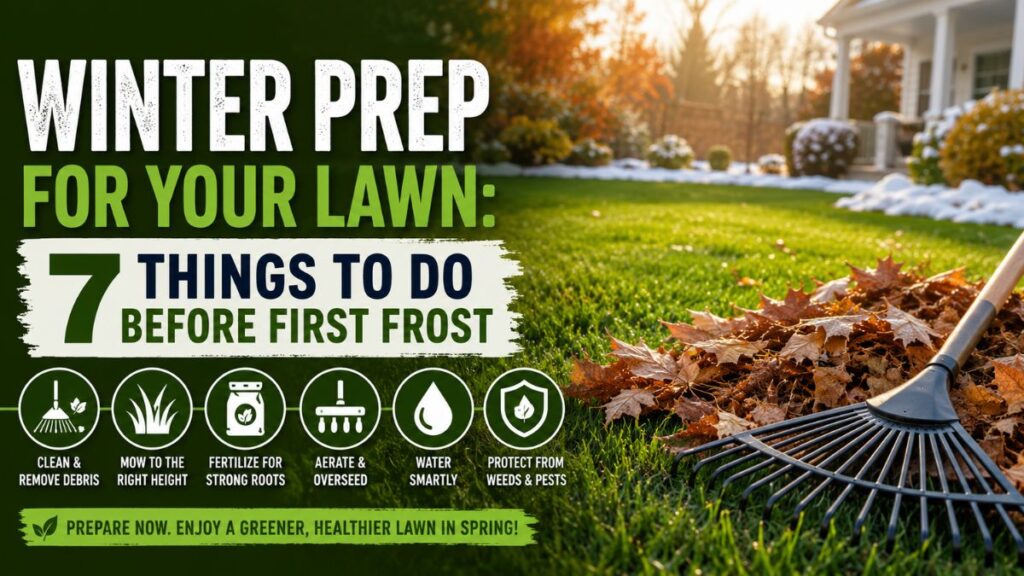
A lush, green lawn doesn’t happen by accident—especially after winter. The secret? What you do before the first frost hits. Many homeowners underestimate how critical Winter Prep for Your Lawn is, only to face patchy, weak grass in spring. But with the right steps taken now, you can protect your lawn from harsh cold, reduce damage, and ensure a vibrant comeback when warmer days return.
Clean, Mow & Prepare the Surface Properly
Remove Leaves and Debris
A thick layer of leaves may look harmless, but it blocks sunlight and traps moisture, leading to mold and disease.
- Rake or blow leaves weekly
- Clear twigs, dead grass, and debris
- Keep the lawn surface breathable
This step is essential in any how to prepare lawn for winter season checklist.
Mow to the Right Height
Before the first frost, adjust your mowing height slightly lower than usual.
- Ideal height: 2–2.5 inches
- Avoid cutting too short (can stress roots)
- Gradually reduce height over 2–3 mowings
Edge and Define Borders
Clean edges help prevent grass from spreading into unwanted areas and give your lawn a neat, winter-ready appearance.
Strengthen Roots with Feeding & Aeration
Apply Winter Fertilizer
Feeding your lawn before winter ensures strong root development and early spring growth.
- Use a slow-release winterizer fertilizer
- Focus on potassium-rich formulas
- Apply evenly for best results
To get precise application rates, use this helpful tool:
Winterizer Fertilizer Calculator
This is especially useful for best fertilizer before first frost lawn care planning.
Aerate the Soil
Aeration improves oxygen, water, and nutrient absorption.
- Use a core aerator for best results
- Focus on compacted areas
- Ideal timing: early to mid-fall
Overseed Bare Spots
Fill in thin or patchy areas before winter.
- Choose grass seed suited to your climate
- Water lightly after seeding
- Helps prevent weed growth in spring
This aligns perfectly with fall lawn care tips before winter frost.
Protect Your Lawn from Winter Damage
Water Smartly Before Frost
Hydration is crucial, even in cooler months.
- Water deeply but less frequently
- Stop watering when ground begins to freeze
- Avoid overwatering (prevents root rot)
Control Weeds Early
Weeds compete for nutrients and weaken your lawn.
- Apply pre-emergent herbicide if needed
- Remove visible weeds manually
- Focus on preventing winter weeds
Avoid Heavy Traffic
Frozen grass is fragile and prone to damage.
- Keep foot traffic minimal
- Avoid parking or placing heavy objects on lawn
- Create designated walkways if needed
Inspect for Pests and Disease
Before winter sets in, check for signs of trouble.
- Brown patches or thinning grass
- Fungal spots or unusual growth
- Treat early to prevent spreading
This is a critical part of any winter lawn maintenance checklist for beginners.
Common Mistakes to Avoid
- Cutting grass too short before winter
- Leaving thick layers of leaves
- Skipping fertilization
- Overwatering late in the season
- Ignoring early signs of disease
Avoiding these mistakes can significantly improve your lawn’s survival and recovery.
Benefits of Proper Winter Lawn Preparation
- Stronger root system
- Reduced winter damage
- Fewer weeds in spring
- Faster green-up after winter
- Healthier, thicker grass overall
FAQs:
1. When should I start Winter Prep for Your Lawn?
Start in early to mid-fall, about 4–6 weeks before the first expected frost.
2. Can I fertilize after the first frost?
It’s best to fertilize before the first frost so nutrients can be absorbed effectively.
3. Should I water my lawn during winter?
Only lightly if there’s no rainfall and temperatures are above freezing.
Final Thoughts:
Winter doesn’t have to mean damage and disappointment for your lawn. With the right Winter Prep for Your Lawn, you’re not just protecting your grass—you’re setting the stage for a lush, healthy yard come spring.